
Art Exhibitions in Tokyo – Spring/Summer 2026.
9 hours ago
 "An Artist’s Perspective" was written by Jeremy Cantor, Character Animation Supervisor for Sony Imageworks. It's weird but this guy's iMdb page reveals he hasn't worked on any film project in a while. He did however make that lousy ol' Kevin Bacon craptastic 'Hollow Man', but I guess he moved on to be something else. Please note that the guy's a 3D animation-type guy, but I think his advice is still sound for savants like myself.
Anyway, I think I will post a bulk of this article he made, just for reference sake in differentiating the different mindset involved in designing for either a game, or film. Keep in mind that the ideas and opinions below are merely based on the experiences of a single artist and are not meant to be regarded as hard and fast rules. Remember that all rules have exceptions.
Variety vs Focus
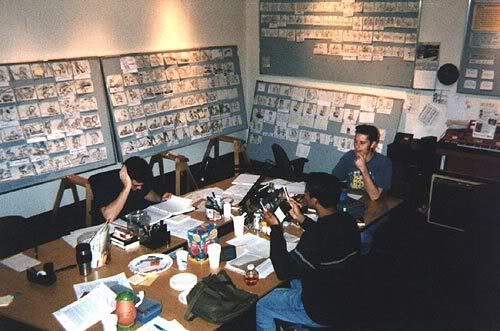
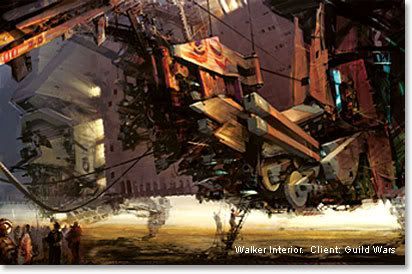
During the course of a game production, you often get to wear many hats. You might find yourself doing any number of the following: character & vehicle design, modeling, texture mapping, background painting, character setup, FX animation, character animation and perhaps even level design and box cover art.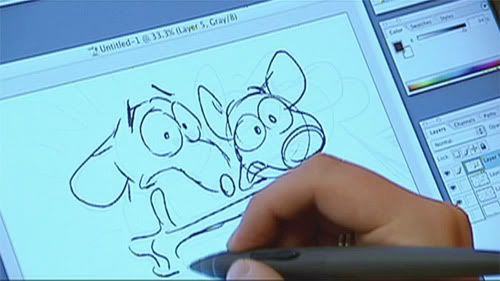 In the films industry, you are usually pigeon-holed into a single discipline for the duration of a production. This singular focus has the advantage of accelerating your improvement in a specific skill- set, but the lack of variety can become tedious.
Many VFX companies offer their employees the opportunity to “try out” for different departments between projects.
And of course, the variety in your work very often depends on the size of the company and production. Smaller companies and productions tend to expect wider skill-sets from their artists.
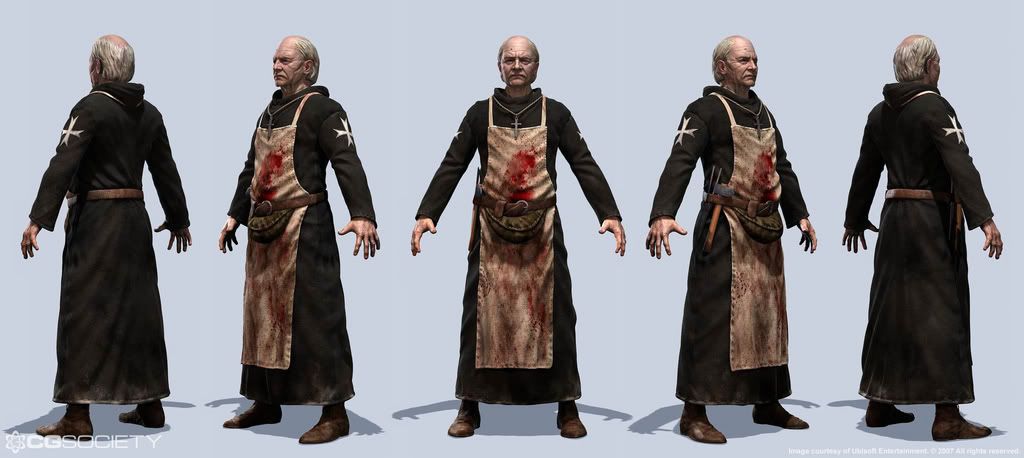 In games, the artist will work within a box of technical restrictions, including polygon count, number of joints, frame rate, texture resolution and memory. Film artists have less technical restrictions (but often more creative restrictions). These technical restrictions force game artists to tackle what we call constraint-based-design, which often demands a higher level of creative problem solving prowess.
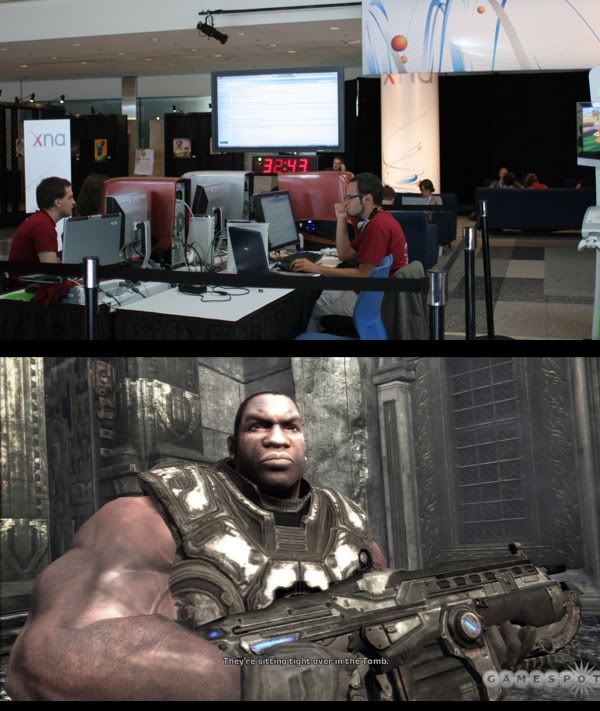 Film work tends to demand a higher level of attention to detail. However, a game artist will finish a production with a larger quantity of work.
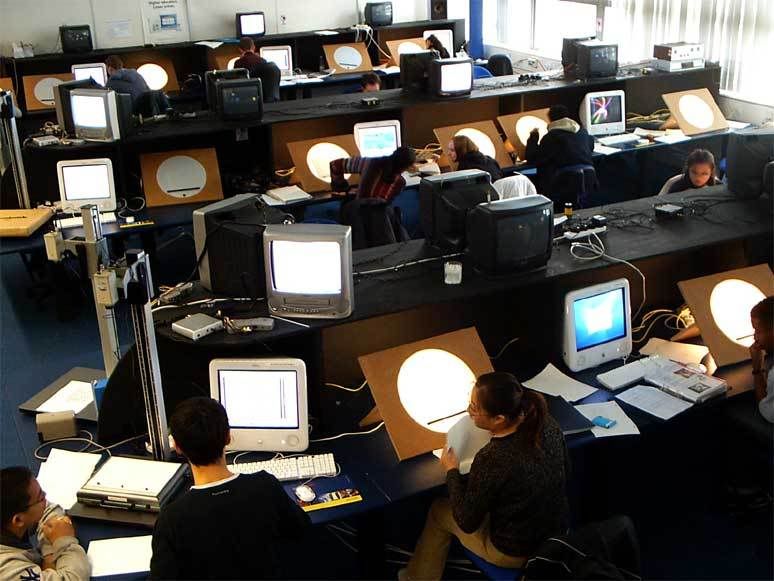 Film work tends to be more expensive than game work. The fact that more money is at stake is often the reason why there tends to be less opportunities for creativity and experimentation. However, the larger budgets in film productions often provide the artists with newer and better tools.
 An average game production team is usually smaller than an average film FX team. This generally supports a more collaborative atmosphere.
 I especially like my chip bags that have great life lessons. It's like having the Ten Commandments on your Coke can or something. This stuff will make you rethink your life.
 And speaking of rethinking my life, I've got some... well, "sad" stuff to announce in my next post. I'm not so sure how many of you would actually care, but well, it matters to me, so I guess you should care. I mean, there are at least a dozen of you who go here, right? That means you care?
How could you? How could you, Void?! I take you in, I treat you like family, and this... this is how you repay me?! By... by treating me like a lampost?! A dead stump?! A discarded tissue paper with your leavings?!
Anyway, I've been feeling weird lately - partly because I haven't entered anything in Justy Ueki's Robotech Photo Contest (my fault) and because Robot: The Digital Manga just looks so f**king beautiful.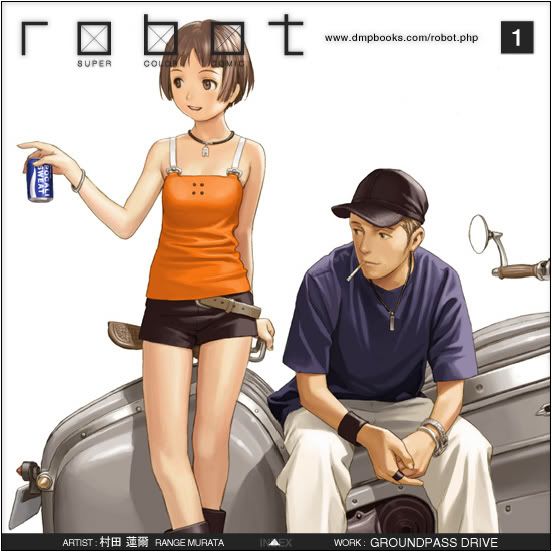 Yes! I know, you damn Void, its another post where I put up a series of really beautiful screenshots! So what?! I like to surround myself with purty looking things! And everytime I go to a comic shop or a high-end bookstore, I see this Robot manga thing, and its priced at 3,000.00 Philippine pesos! Yes! That's far too much! It's murder! Not with the money I'm earning now!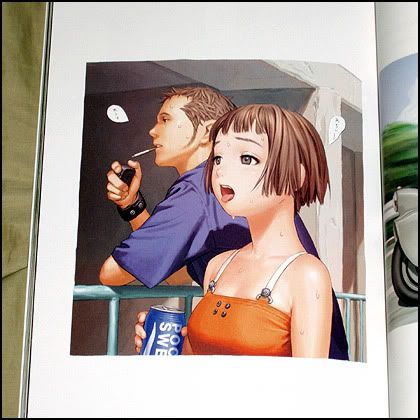
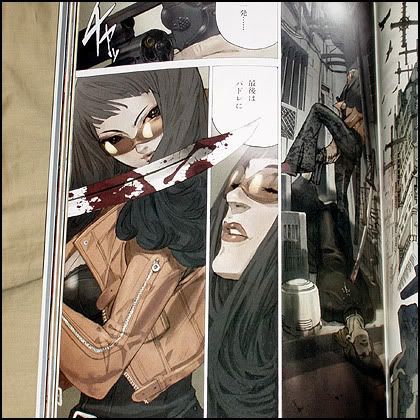 I don't care if it's in Japanse! I'll make the story line up! You see that panel up there? It's about a girl and a guy about to indulge in some S&M!
Gosh. So okay, what the hell is robot manga anyway? Here's Wikipedia again! To solve all my problems.
robot is a series of books containing the art of various Asian artists. The series was created by Range Murata as a way for upcoming artists to get their work published. Volume 1 was released on the October 21, 2004. The series is currently at 8 volumes.
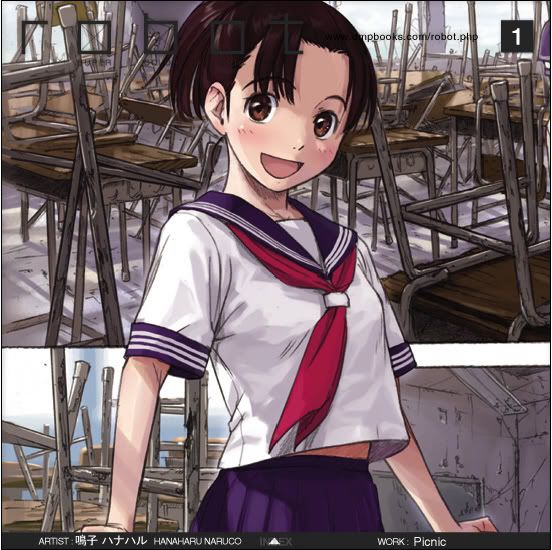 Digital Manga Publishing is responsible for the North American release. The first volume was released August 6th, 2005. Due to recent developments in talks over publishing negotiations breaking down, DMP will not be publishing any future volumes past volume three. Rights to publish at least Volume 4 have been picked up by Udon Entertainment according to amazon.com preorder info.No wonder its overpriced. I might as well buy that highly acclaimed book by Ashley Wood.
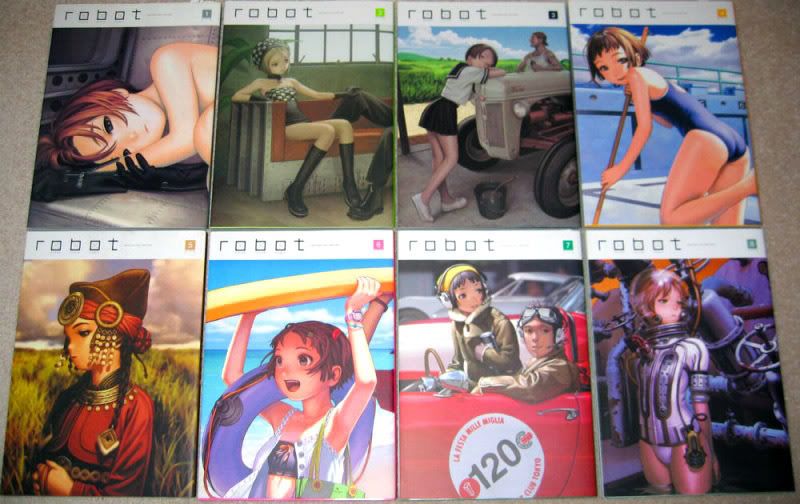 "Stunning, dark, exhilarating and disturbing, Murata's collection of contemporary Japanese comic art gives an inside view of the explosive work happening there today."
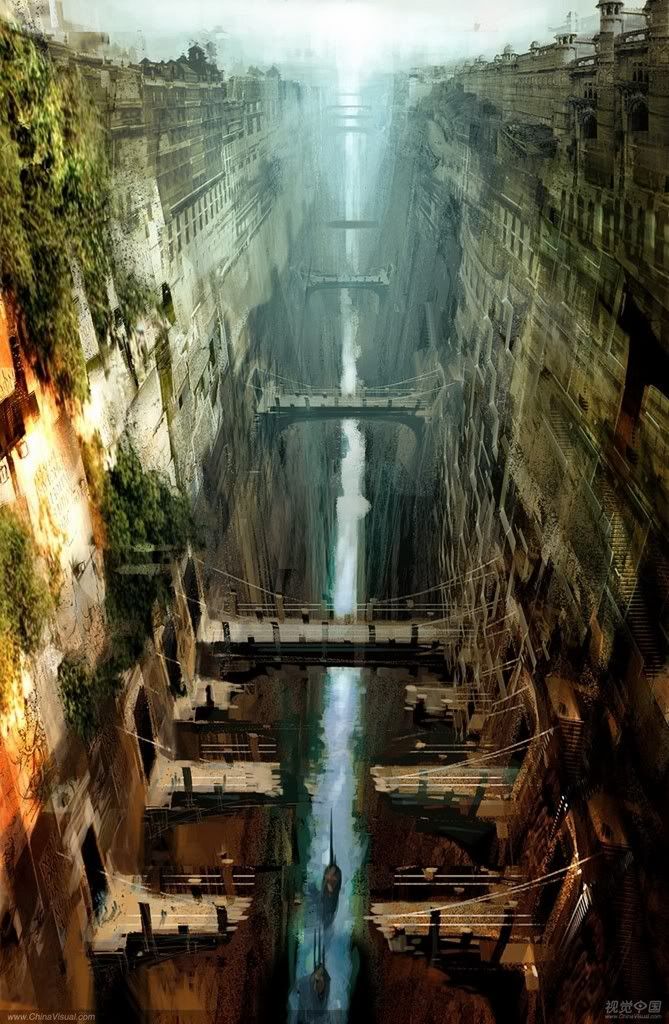
Do I dare believe the hype? Moving on, I also want to ogle at the impossibly, insanely, whatever-adjective-you-can-think-of art by Imperial Boy. An artist whose amazing use of perspective should be admired by all. I don't care why, it should happen.
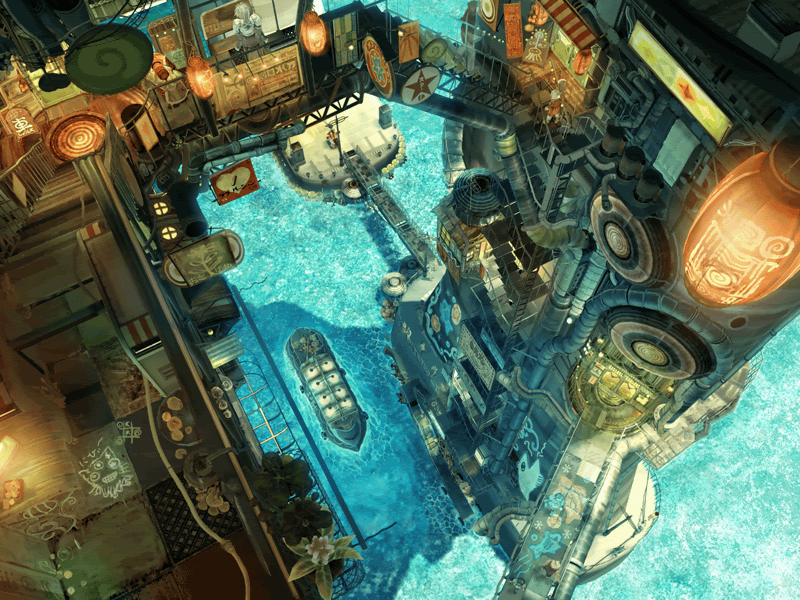 C'mon, this piece is just oozing with atmosphere, brilliant color palette and unique composition. All the essential elements in digital art today.
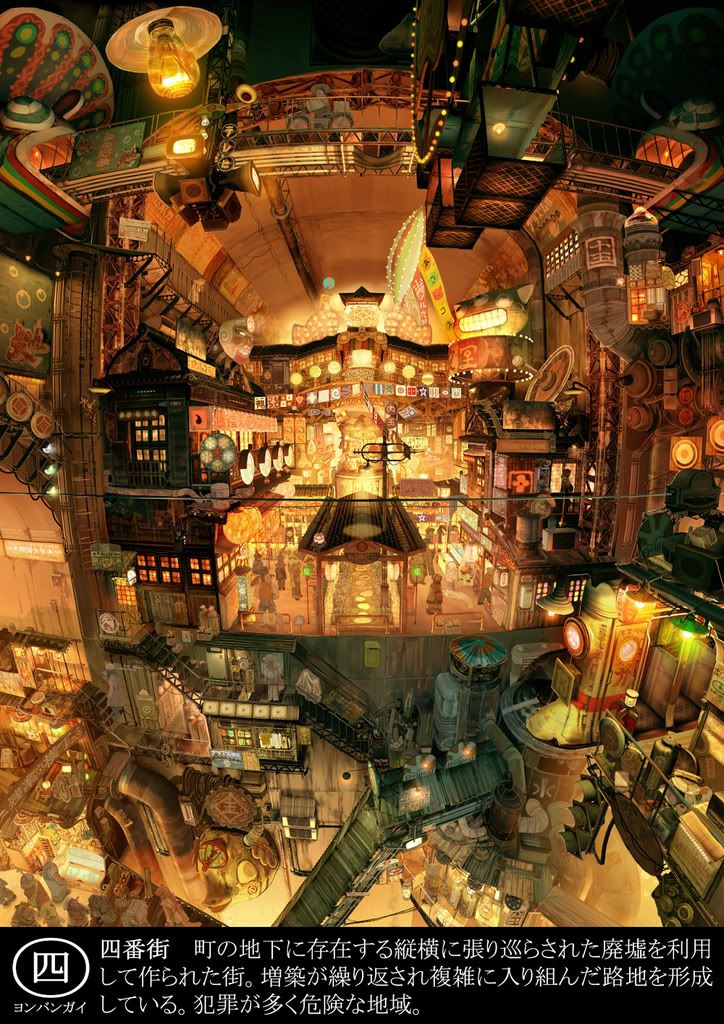 Beautiful, eh? Well, shut it. Gaddamnit. I knew I shoulda named this blog 'The Angry Artist'. Oh well. To close out this post, and to open the gates for a full-scale invasion of manhwa and all that other Korean art stuff, I present to you the amazingly disturbing, funny and brilliantly animated Achi-wa Ssipak. A Korean film that kicks Robotech: Shadow Chronicles nuts. Hard. (If you have a thing for that Robotech movie, erm... well, tough luck - I didn't like it)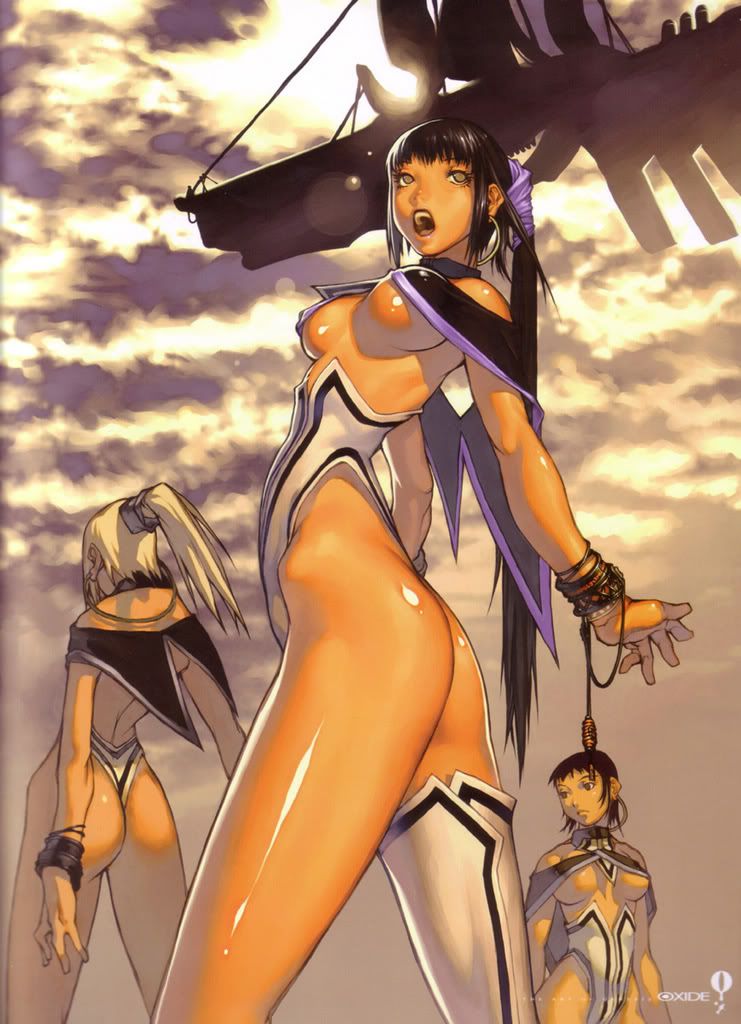
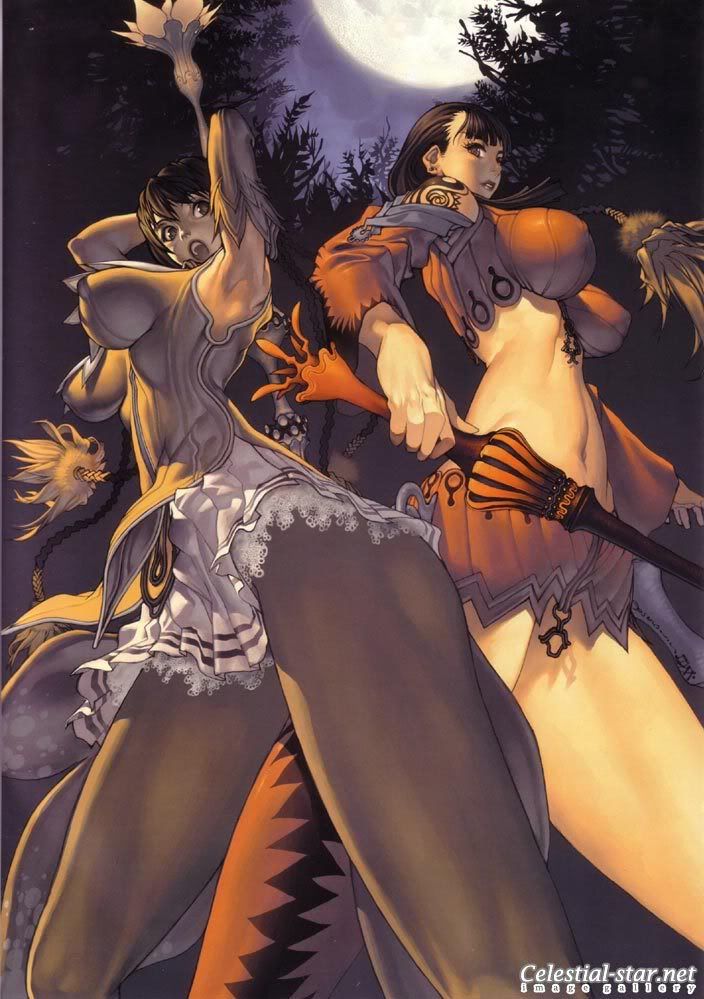
My search for my manhwa madness has led me to galleries filled with the most beautiful creatures not of this life. Yeah, they ain't real. But hey, who said another post where I post impossibly beautiful creatures is bad? In fact, there's your concept right there - hot women. Sheesh.
Most of this stuff are done by artists such as Victoria Frances, or Hyung Tae Kim, Shunya Yamashita, Ugetsu Hagua and some artist named Shingo.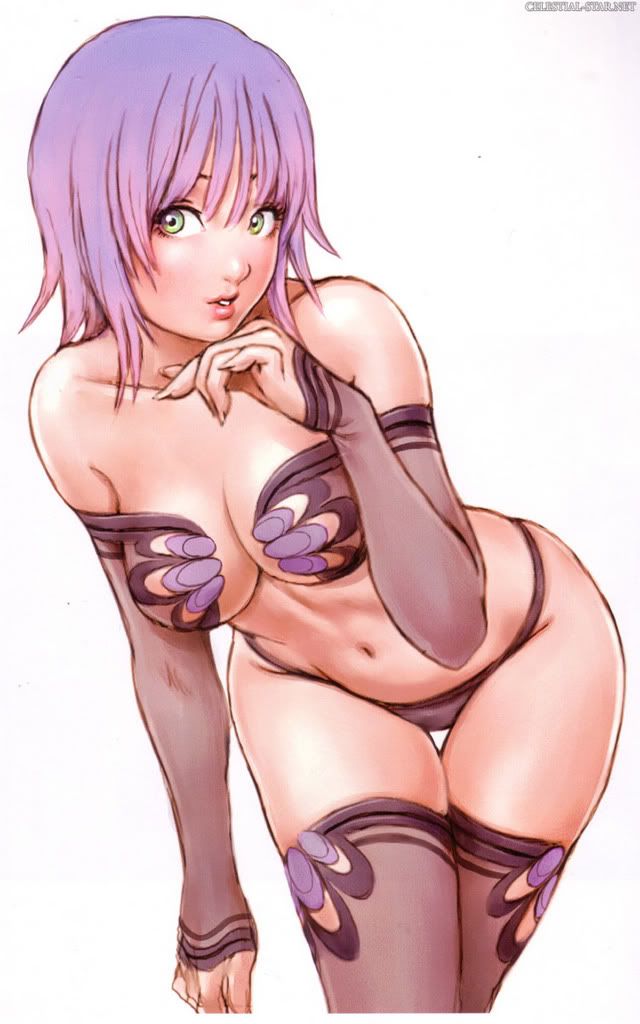
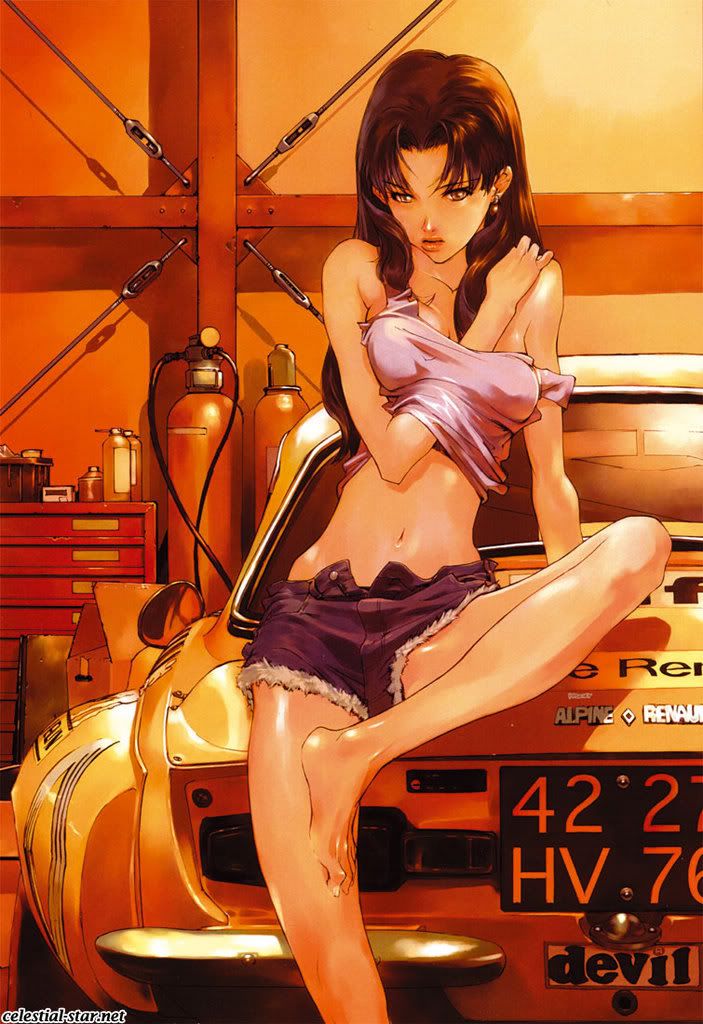 You might be wondering why put up all these incredibly sexy images (at least for some) Well, it's because I hope to achieve that style. And I know, as an artist, that talking about your inadequacies of your talent does not make you an artist. It makes you a hack. That's why I type this post as a blogger. A blogger, people. So shut it!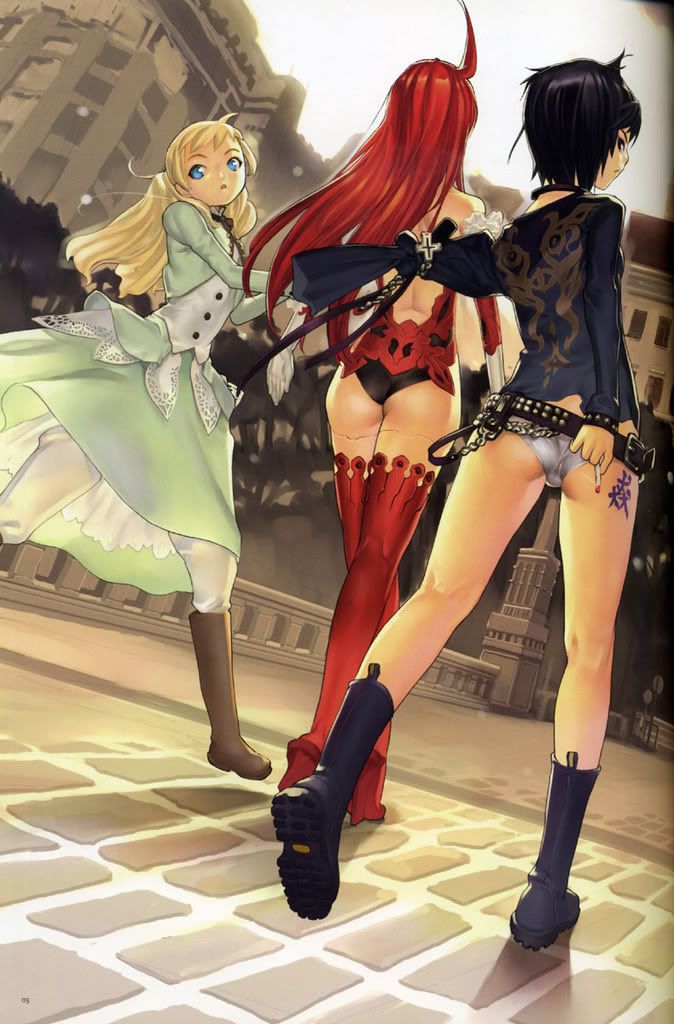
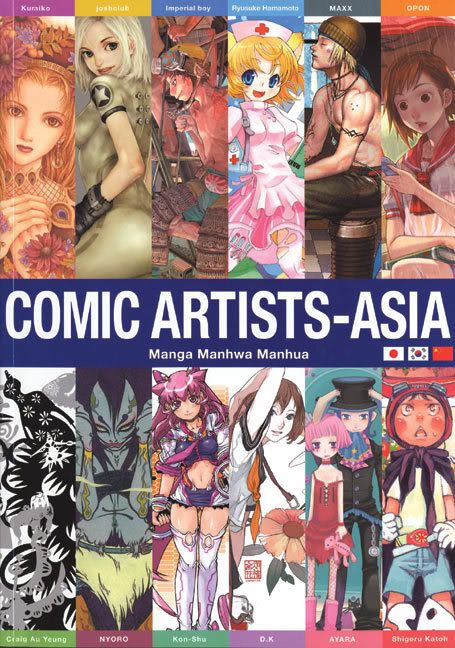 I've always admired that manhwa and its version of the traditional 'manga-style' of drawing. There was always something beautiful and artistic about this whole manhwa thing (which I believe covers the art-style as well as its very own version of "manga-ish" books), despite being harshly critiqued as another clone of japan's manga. As far as I know, Manhwa is only beginning (at the time of this writing) to get international recognition, thanks to forward-thinking publishers from other countries.
 Still wondering what I'm talking about? Well, Wikipedia describes it pretty well:
Manhwa has been influenced by the dramatic modern history of Korea and resulted in diversity of forms and genre[1], but including a mainstream style similar to manga. Distinctive manhwa can be found in editorial comic strips, artistically-oriented works, and webcomics serials.
Typical characteristics of manhwa:
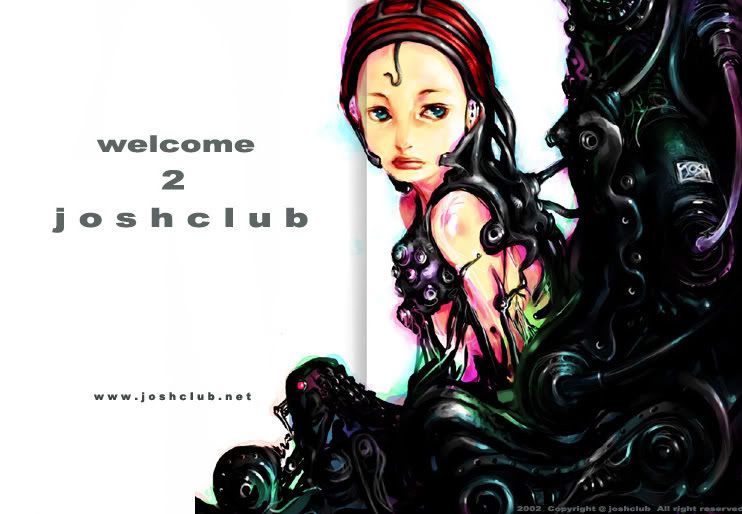
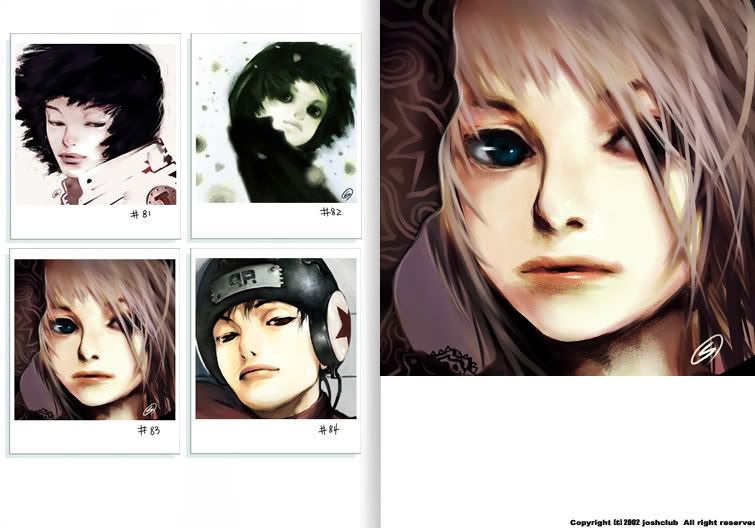
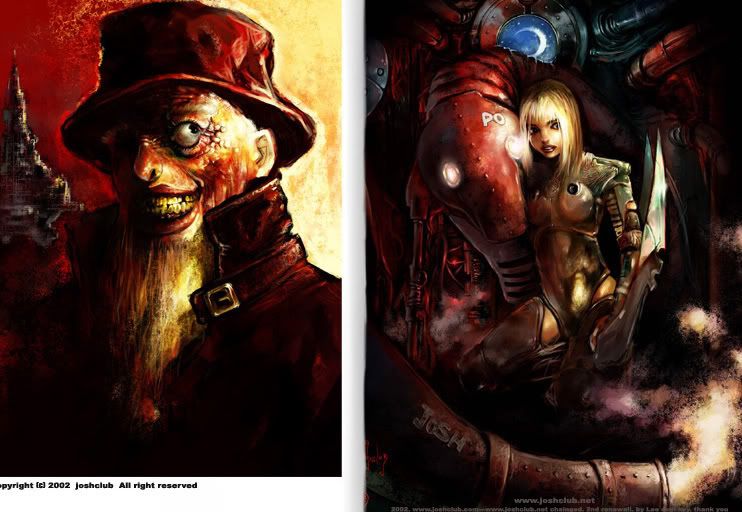 One thing I can say is that (although I know its wrong to generalize like this) many of the Manhwa artist I've seen have always adopted a more muted color palette, whearas Japan-based artist use more... wild colors?? I don't know. I could be wrong on this, but like you give a flying f**k.
 Wow. I think I'll ogle at this guy's art in the near future again. And more manhwa stuff too if you like, Void. What's that? Cat got your tongue? Yeah, I thought so.
 With the bulk of gamers still reeling from the marketing beast of the Halo franchise, I find myself wondering if there will still be a market for the whole "genetically-modified supersoldier" thing - whether it be for that one guy people call Master Chief, or a whole platoon of em' like Gears of War. Who cares what the frickin' market thinks. The "genetically-modified supersoldier" genre will never get old.
If you wanted to hear me yak about these steroid-pumped prima donnas, you should check out the rest of this blog. Today, however, I'm going to make this post, about game intros. Yes, you heard me right, Void. I will yak about the coolest science-fiction game intros I have seen in my life.
Some of these videos I will show have made quite an impact on my creative direction now. Some of these games may be bad, while others are classics and I want to share
First up, Homeworld. The first Homeworld.
It's really one of the coolest intros ever, in my opinion, and yet it almost has no whiz-bang action whatsoever. It's the kind of prologue that really immerses you in its 'home-made' universe (no fancy commercial sci-fi license here!) The visual style is clearly inspired by anime, using the whole "Moving Picture Style" with a bunch of 3D elements thrown in for good measure.
The Homeworld sequel continues that tradition with an even deeper and more epic universe. I know, the whole series isn't for everyone, but if you enjoy a good ol' science fiction yarn mixed with religious undertones / mysticism then this series is definitely a treat. And that mothership. Sheer beauty.
Next, Freelancer.
This is a more traditional science fiction story, with many ideas mixed from various science fiction scribes. It's still a good watch, because the developer of this game is none other than Chris Roberts, the guy behind those Wing Commander games - and that atrocious movie. So be my guess if you like your sci-fi chock-full of aliens, galaxies blowing up, and all that hooey.
Now, the Killzone series (one that I have admired for a while...)
Remember my post on the whole CAPO thing, and Helghast stuff? (I can't find it in my own blog, weird...) How I found the idea of incorporating the evil Nazi behavior and design with science fiction sensibilities intriguing? Yeah, here I go again, totally enthralled by this series - which now, more than ever, is blatantly ripping-off World War II on a universal scale. You may not agree these are like, the best sci-fi intros and all that, but I don't care because you won't tell me what you think is a good sci-fi intro anyway, huh, Void? I thought so.
Enjoy these two cutscenes - I've already shown you the trailers earlier in this blog, weren't those nice as well?
Liberation - sort of a typical army/shogo watching over his precious army slaughter millions in his name (another wonderful idea taken by this developer) and its also a goodie, isn't it?
Look forward for more of my "game intro specials" like this in the future! C'mon! They're fun, aren't they? (Do not respond to this rhetorical question, but I suggest you give feedback or constructive ideas, Void)
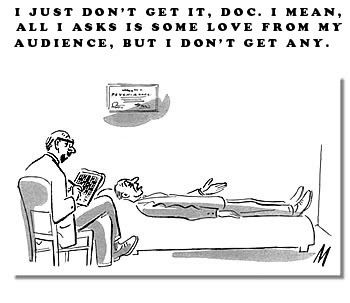 Twenty-odd years from now, and nobody cares to comment. -MMG
 Excerpts from Daniel Docui's interview from ImagineFX. Something any budding artist should take into consideration. That means at least one of the half-dozen of you reading this might want to listen up for once.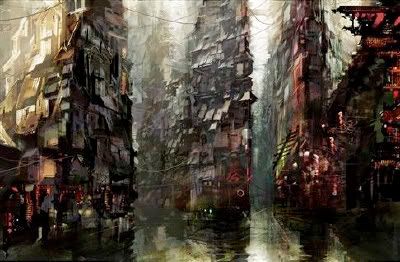

FlameDragon poses this question:
One person on gamefaqs a while ago criticized my drawing as not having much life in it, and I found this to be an intriguing critique. How does one make their drawing have "character" and feel alive? I know mine aren't since I was just drawing from photographs but what about in general? And what would I be able to do to get my drawings to have life?
Kev Ferrera provides his point of view:
Photographs capture the surface of things for one static moment. Art captures the artist and life force. Art exists by itself. You must invest dramatic spirit into your work. You cannot get this from a photograph because a photograph was "drawn" by mechanical means. You must feel emotional as you do art. You can be technical too, but never coldly technical.
Try to get imbalance and tension in your work. Design the smallest items to the figures to the composition as a whole to have dynamic angles, lightning bolt shapes, spirals/helixes, stepping stairs, teetering shapes... have your figures caught in the act of moving, in between one movement and another (thus off balance), have torsional twist not just to the hips, but to every limb, the wrist the neck the shoulders the jaw, etc. Of course the torsional twist does not have to be a violent twist, it can be subtle... but investing your forms with torsional twist at all, will give it life, even in poses that would normally be static.
Think of everything as silhouettes. And think of silhouettes as black ghosts in a disney film. Think how much expression, without words, a black ghost shape can have. Then apply that to every aspect of your art, from the stroke of your brush, to the largest compositional shapes in your pictures.
Give everything character. Don't just render something so it looks like what its supposed to look like. Make everything personal. And your work will become personal. And this will automatically bring life to your work.
Seedling says:
Saying that a drawing "lacks life" is a lousy critique on its own. A helpful critique will tell you something concrete enough that you can actually do something about it without consulting a mystic. Some examples of better critiques would be, “this drawing lacks life because the interesting patterns created by the silhouette of the potted plant are lost against the patterned background” or “this drawing lacks life because the figure is in a stiff frontal pose that doesn’t tell the story as well as it could if he were turning at the waist and reaching dramatically for the McGuffin”.
 Yoshitaka Amano, no reason his art is here
 I have to believe that the small details and nuances of life as it goes by is rewarded at some point in your work. Just as people say the key to great communication is to shut up and just listen, sometimes you just want to stop doing and start watching. To watch though you have to be there. Don't sit in front of the tv or at a video game all the time. Don't just look at people in cool photos sitting along the beach. Drive to one and experience it. When you start drawing you will remember those little experiences and they will show in your work.
 As far as technical stuff goes, maybe focus on the hands and eyes. Hands show great emotion and are often neglected because they are difficult to nail down. Eyes show great emotion. If you draw something, think of the function behind it. Make it feel lived in and there for a purpose. Sure a gas mask is really cool but does his outfit reflect that? Does he have the marks of some chemical burn? Does his costume show his world is post-apocalyptic? A dude with a huge metal plate over his mouth might look cool and gritty but think about how he would eat? That might lead into other design choices (maybe tubes to absorb materials, etc.). Overall, it will make the piece feel more "real".
 Okay, I just added these pretty photos because I like looking at
  At first, Bill Sienkiewicz was an exponent of superhero-comic artists. Then he went deeper into comics. Together with writer Alan Moore, he created 'Big Numbers'. The acclaimed mini-series 'Stray Toasters' he did alone, and it became a big success (re-released by Graphitti Designs). With Frank Miller, he created 'Elektra Assassin', another successful series for which he received the prestigious Yellow Kid Award and the Kirby Award. He also produced the acclaimed artwork for the painted biography, 'Voodoo Child: The Illustrated Legend of Jimi Hendrix', published by Viking Penguin.
 Newell Convers Wyeth (October 22, 1882 – October 19, 1945), known as N.C. Wyeth, was an American artist and illustrator. Born in Needham, Massachusetts, he was the star pupil of Howard Pyle and became one of America's greatest illustrators. (Wikipedia, 2007)

 Many of you may have figured out that I don't use the term "concept" so broadly, I might as well call this site "all kinds of stuff" rather than "Concept Central". (Which is weird since the former name is already the name for John Kricfalusi's own blog)
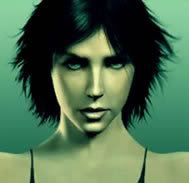
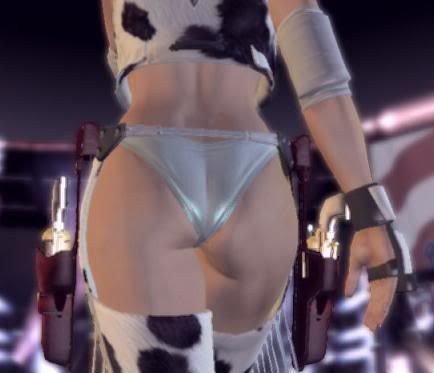 Quantum leaps in processing power and rendering technology has helped fuel this trend to push these virtual vixens out. Now women in gaming don't just look like sexy mannequins, now they're even more life-like, sexy mannequins. And now we have a nice, healthy demand from teenage boys and young adults wanting more of this stuff. Whooooa!
 So what's the point of this post? Well, basically to ogle at this trend the entire entertainment industry is going through. Sex has always been a big seller of media, and now it has completely invaded my beloved format. Yay! Which then makes me think of the applying it to my own project! You know what that means... Crap.
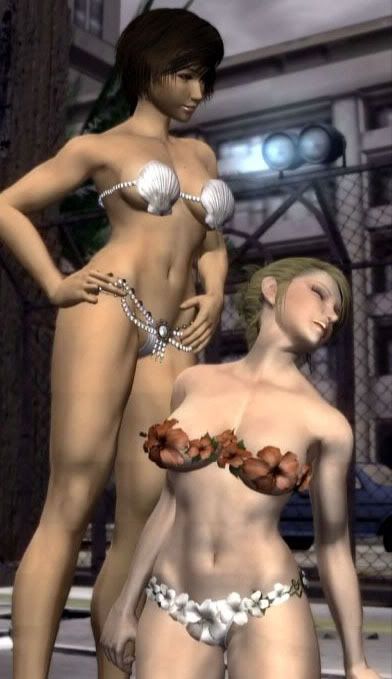 To round out this really, really weird post (minus all the other weirdness in my other posts), maybe you should watch this old list of video game vixens, and this other video intro for an old Xbox360 game that I have never played, but have admired from the distanced for quite some time. Yeah. Maybe you should do that. What do you think, Void? You wanna give feedback or something? Should I go back to talking about Robotech?


