 This is the fourth and final feature on the amazingly creative Peter Chung. It was a fairly long and laborious ride, but overall his take on the creative process certainly opened my eyes. (More so than any Creative Director guy actually) If you are sick of hearing about this guy and how he’s really just an overrated fop, then I say to you "
You know what’s funny? A few weeks after writing the Peter Chung Specials, I actually found the Aeon Flux first season, 3-Disc DVD set! I literally froze for a few moments before I realized that this was real. Without hesitation, I bought the damn thing and whaddaya know, they don’t make shows like this anymore! It’s not Japanese anime, nor was it run-on-the-mill Saturday morning American animation, it was like that time I watched the original Heavy Metal animation. It was surreal, addictive and oftentimes over-the-top. Definitely an acquired taste.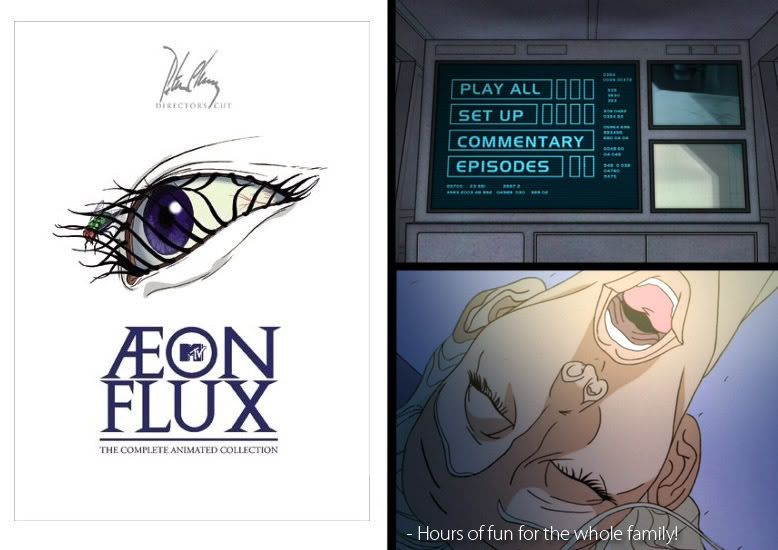 It sure beats the hell out of watching overpriced, uninspiring oddities like the Robotech: Shadow Chronicles Special Edition DVD set.
One thing that really attracted me was Mr. Chung’s style. It’s hard to say who exactly are his influences, so lets just say that his style is “inspired”. (Where “Inspired” doesn’t necessarily mean bad copy of the original source) It’s different, and I like it. A lot. Here are some excerpts from various interviews around the net…
Morphizm: What would you say that style is? How did you arrive at it?
Peter Chung:
Well, I don't know if it's right for an artist or designer to comment on how his own style came about. I know that sounds like a copout, but in a way the ideal is to try not to achieve a style but rather approach everything in a way that feels most natural to yourself, and that ends up being your style. You end up with these labels after the fact. It's a very complex process.
My thoughts:
Peter has a thing about labels, which you will soon find out.
Peter Chung:
Yes, you obviously pick up points from artists whose work you like, but that's just half of it. The other half of it is avoiding formulas used by designs you don't like. And, in a way, that's a lot harder to do that it sounds. It's very hard not to show signs of influence. It's why so many animators draw in such similar styles. It's even harder to shed yourself of those influences.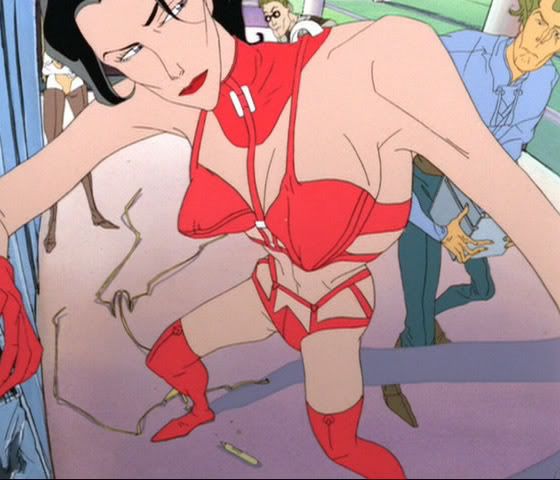 Morphizm: (A different interviewer)
It also helps to know what an artist has done throughout his career, not just the stuff he or she did that was popular. The idea that you were partially behind the design of Rugrats seems to irrevocably change the idea of a "Peter Chung" aesthetic, one that seems mostly informed by Aeon Flux. Just as knowing, as many don't, that much of popular Japanese animation was informed by Walt Disney.
Peter Chung:
Right, through Osamu Tezuka. I would say that right now a lot of Japanese animation has become very incestouos and inbred. It's become so much like animation of animation. Know what I'm saying?
Morphizm: A copy of a copy.
Peter Chung:
Right, in the same way some Cartoon Network shows, like Powerpuff Girls and Dexter's Laboratory, take that retro Hanna-Barbera style to the extent that it looks like animation made by people who spent their childhoods watching animation.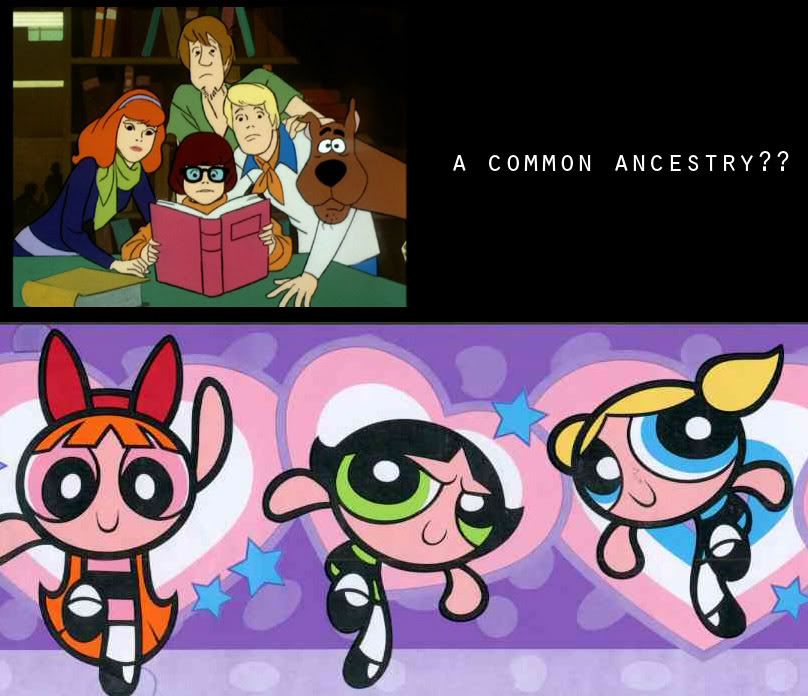 My thoughts:
Cool. I didn’t know about that! Well, some of it at least. It seems like I’m the kind of guy that has to have every aspect explained to him despite knowing that stuff already. I’m hard headed that way.
In any case, I will digress and point out that a lot of artists nowadays, especially those involved in the comics industry, have shown an increasingly manga-like influence. The Japanese manga-style has certainly become the style-du-jour for many young and impressionable talents. Even the animated stuff we see on TV now has characters looking more and more like anime hybrids.
With such a strong Japanese influence pervading the art community, I really do wonder what the future holds. Will young talents pursue their own style, or will there everything be soulless ‘manga-inspired’ or ‘manga-influenced’ work?
What am I saying?? I AM one of those young artists who have conformed to the conventions of manga visual aesthetic! But I guess it had more to do with me getting into this art biz by drawing anime fanart...
Seriously though, it takes real talents like Peter Chung and even highly acclaimed artist Ashley Wood to go beyond the blah-ness of the so-called stylistic-standards today and forge a style of their own. It’s a wonder the Aeon Flux aesthetic still seems so fresh even today despite having been made way back in the 1990’s.
The next question is an interesting one… About how artists lament about the “suits” and public perception of animation. (Reference taken from highly entertaining HBO’s series, Entourage)
 That damn Mouse has truly changed the way people view animation in the Western
world. American animation is still seen as something "for the kids", in the same way anime
is still considered "kiddie-nonsense" thanks to shows like "Pokemon".
DR: (A Different Interviewer)
Do the studios treat animation differently these days, or do they still have the attitude that it's something for kids?
Peter Chung:
It's strange in my case because I do a particular kind of animation, which is unusual, at least in this country [USA]. Yes, I find it very difficult.
I'll give you an example. I wanted to make Aeon Flux as an animated movie, which seemed to make the most sense because the idea behind the show, and the character originally, was to do things that you couldn't do in live action. For example, making her look the way she does and having the characters dress the way they are. It's something I wanted to do in animation, but I don't know if I'd do that in live action - you couldn't get away with it.
That was very frustrating for me, because they wanted to do an Aeon Flux movie, but they wanted to do it live action and change it to the point where it wasn't that close to the source material any more.
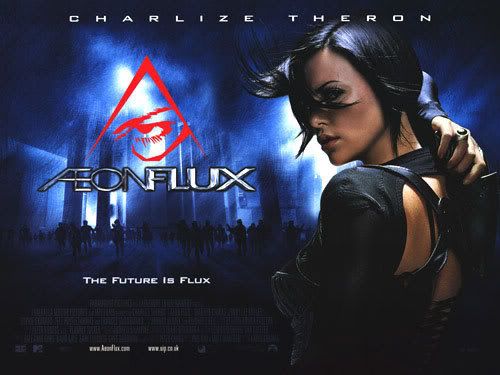
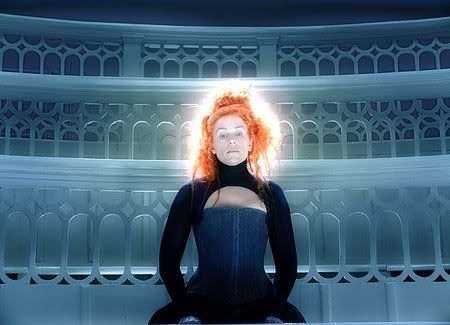 Anyone think this highly respected actress in the Aeon Flux live action film looked like s**t?
My thoughts:
Anyone know what happened to the Aeon Flux movie? Yeah, can you believe it? I talk about Peter Chung for four times in this stinkin’ blog and I still haven’t seen that movie-they-call-a-travesty. Oh well. I think the biggest travesty now is that when Aeon Flux is now associated with Charlize Theron. While not really a bad thing, it certainly made some people think that the original source material might’ve sucked as bad as the film. Aaaaaaugh!
Peter Chung:
In that sense, yes. I think that there's not really an understanding on the part of the studios on what the advantages are of using animation. All they tend to see are the disadvantages - like it takes a lot of time and maybe has less appeal to a wider audience - although it's strange that they'd make that last argument, because a lot of the top grossing films are animated movies.
DR:
It doesn't seem to be the rule when you take a live action movie and create an animated spin-off, though. Animatrix and Dark Fury both seemed to work well, and Genndy Tartakovsky's Star Wars: Clone Wars animated series was impressive.
My thoughts:
”Appeal to a wider audience” is a phrase that I have learned to love and loathe at the same time. When it’s applied, it can cause uproar among fans in video game franchises like Starwars Galaxies and about a dozen other niche gaming properties.
When done wrong, you’d have forgettable features like the uninspiring Shadow Chronicles, a direct continuation of the 1985 Robotech series or even the Aeon Flux film. (Sorry, I can't resist)
When done well, it can bring otherwise “closet” interests like Transformers, X-men and Spiderman to worldwide acclaim. What exactly makes something appeal to a wider audience? Watch this blog and find out!
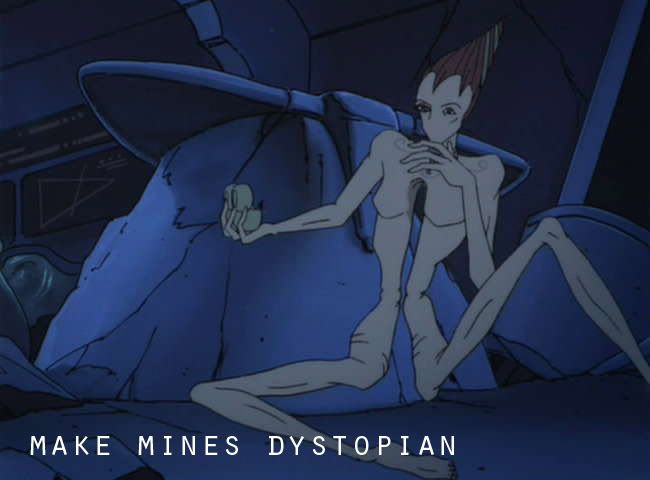
Right now, lets find out what Peter Chung thinks about… dark dystopian futures!
 DR:
DR: In Aeon Flux (the series) we are offered yet another dark, miserable future for mankind. Why do you think it is that writers always seem to picture the future as a bleak place?
Peter Chung:
I've found this myself. I think that movies in general tend to try to convey as much as possible by amplifying contrast in every aspect. That's why movies are always filled with sex and violence - much more so than people's ordinary lives. I think it amps up the level of tension in a movie. I see it being done for that reason. You want to create an environment which is going to be more dramatically compelling.
Most of the movies that we see made about the past are also fraught with lots of violence. We see endless scenes of people fighting each other with swords [laughs]. It seems like most historical movies are focused on that stuff, whereas ordinary life wasn't like that - that was the exception.
My thoughts:
Escapism. Whatever it takes to make us forget about the insanity of daily life. Still, it doesn’t explain the success of game franchises like The Sims…
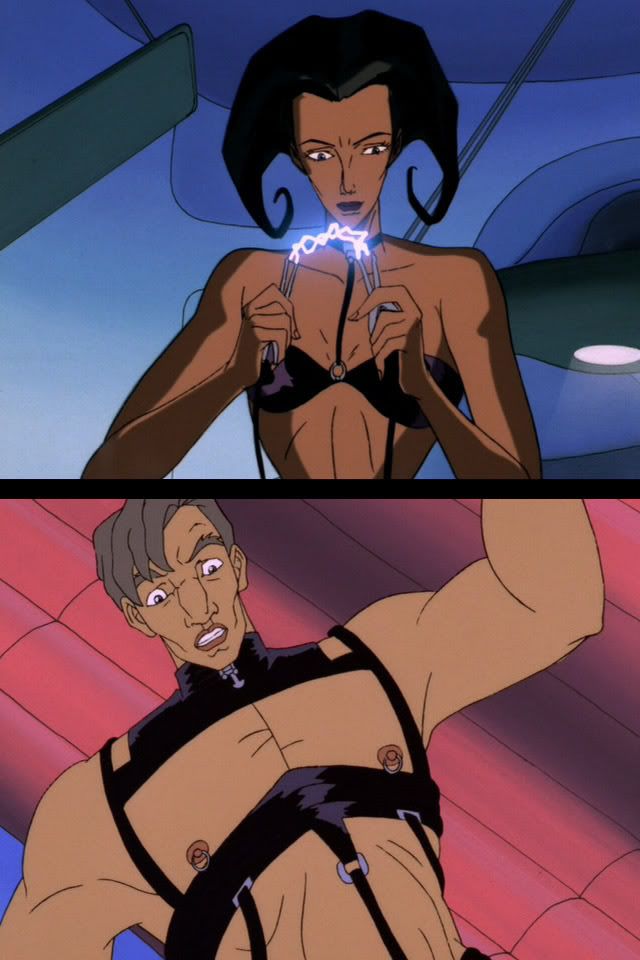 Yes! I think a Hollywood film with scenes like this would click with the moviegoing
public! (Seriously, I think it would - sorta like Ang Lee's Lust, Caution...)
Moving in a little more about Hollywood, and how the film adaptation of Aeon Flux has reaffirmed Mr. Chung’s stance on Hollywood and how iconic characters and images clash with reality.
DR:
Why do you think that Hollywood seems to have a habit of getting it wrong when transforming comic book characters into live action movies? And do you think that the live action Aeon Flux movie fell into a lot of those traps?
Peter Chung:
Yes, it definitely fell into a lot of those traps. I think they tend to take things too literally - which when you're doing something in comic book or animation, you are really working on a much more mythical level. And you can't help it because drawings are, in a sense, symbols.
The way superheroes characters are dressed, for example, has a lot to do with creating an iconographic image, but if you literally had somebody dress up like that it would look ridiculous.
The way around that is to create a whole world in which everything is portrayed in that iconic way. And the ones, I think, that fail are those that plop this iconic character in a very realistic, every day environment. And that's kinda goofy to me.
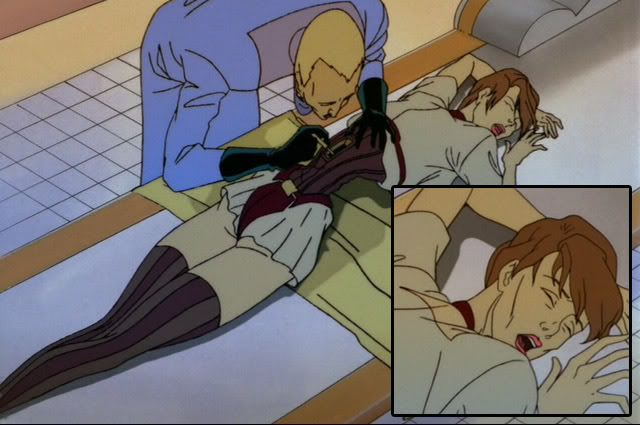 In the dark future of Aeon Flux, a backrub just ain't
a backrub anymore.
My thoughts:
I did hear from renowned comic-guy Scott McCloud lament at how the comic industry had to rely on the success of its Hollywood industry to achieve a wider acceptance and appeal. The comic medium, from the power of its narrative, to its iconographic images is both powerful and beautiful, and sadly under appreciated and even looked down upon to this day. Lets continue:
DR:
CGI is still not at a level where it's believable yet, but when it is do you think that this would help animated movies to be better accepted by the studios?
Peter Chung:
No, because it's not about realism for me. I think that the comics that are the least successful, for me anyway, are the ones that are painted and rendered and made to look like scenes that have practically been photographed. I find those the most distracting. The more you try to make them realistic, the more preposterous it becomes. Keeping the graphics very stark and iconic I think works a lot better.
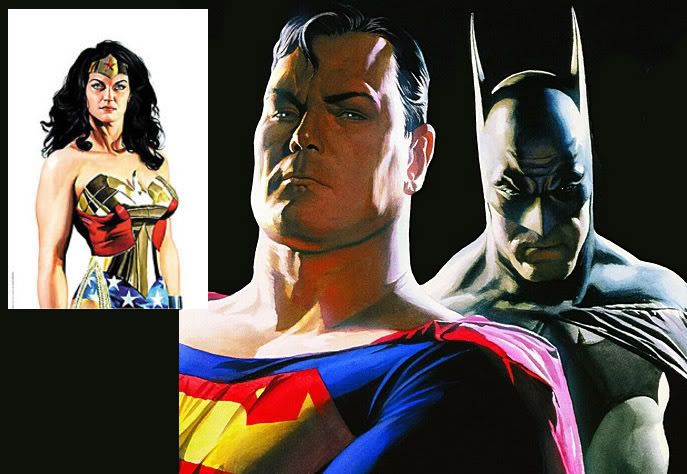 Yes, they are very, very angry models.
Peter Chung:
If you compare Jack Kirby's superheroes to Alex Ross's... With Alex Ross I'm always aware of some model posing in his studio [laughs] wearing some goofy costume. Whereas, with the Jack Kirby drawing, the drawing is the character. It's not a drawing of a guy dressed up as a character, the drawing is the character. That's the strength of the medium.
If you look at a Pixar animated film the characters are what you see on the screen. What you see on the screen - it's not an actor playing the character - that's the character. That's the advantage of animation over live action.
My thoughts:
Ever since I’ve read that statement by Mr. Chung, I haven’t looked at Alex Ross’ covers the same again. Okay to be fair, Mr. Ross’ art looks amazing at times, the comics themselves are beautifully painted, but it’s those freakin’ covers that are makin’ me laugh.
We go now to what he thinks about Hollywood – and Mr. Chung’s article which was written way back in 1998 – and how you just can’t make a good comic book film.
Morphizm:
Has there been anything since that 1998 article was written that you felt worthy to add to the list?
Peter Chung:
Actually no. (Laughs). Not in the area of comics at least.
Morphizm:
What about Sin City?
Peter Chung:
Sin City was a faithful adapatation of a comic book, but whether or not it was a good film depends on how you liked the comic. But I think it did a lot of things that are necessary in the comic book, but not in the film. Like the voice-over narration, for example. Where the characters are constantly describing stuff you're actually seeing happen. Which became irritating after a while.
 "And then I looked at him, and he asked me what I thought about his
plan to kill that yellow bastard. I nodded, trying to tell him to shut the hell up cuz'
the bastard just wouldn't stop talking"
Morphizm:
They were going for the film noir vibe.
Peter Chung:
That's another thing, which is kind of a pet peeve of mine. Like I was saying earlier, you don't set out to make something in a certain style, whether its film noir or whatever. When the original filmmakers were making film noir, they didn't know what film noir was. That was a term a French critic slapped on the films later on. Those artists were making films that were based on what they observed and the evnironments they lived in.
Morphizm:
But these things become part of the cultural grammar.
Peter Chung:
Right, they do. But you shouldn't set out to make things that way. Then it's no longer authentic.
My thoughts:
Again, Mr. Chung says that thing about the labels and stuff! I think its brilliant! Don’t approach your work saying “it’s going to be a Starwars / Battlestar Galactica-ripoff” or something. That’s probably why I love shows like “Firefly” – it doesn’t really go around saying “Hey! Look at me! I’m a grand space opera in the vein of Starwars and Star Trek!” (As the Robotech: Shadow Chronicles film has proven) It’s a cool show about “cowboys” in space. Try to classify that with your cultural grammar please. As Mr. Chung said earlier about his artistic style, you go make something that just comes natural. Whatever fits the story / narrative.
Now here’s the real interesting part of these interviews – it’s when Peter Chung talks about geek facts. It sorta made me rethink about the way I looked at certain science fiction franchises…
DR:
Stylistically there seems to be quite a lot of retro elements in the design of Aeon Flux. Trevor's lab has large levers with big yellow knobs on them that look like they belong in the '60s Batman TV show. Was that your intention from the start, to give the show a retro feel?
Peter Chung:
Well, I never really thought of Aeon Flux as being set in the future. It was more like an alternate present. I was really interested in talking about the world we live in. I made a deliberate decision not to say how many years in the future it was set.
I think when you set it in a specific time and place then it becomes less relevant. You can say: "It's their world, their time and their problem." Whereas I wanted to talk about our world and our problems.
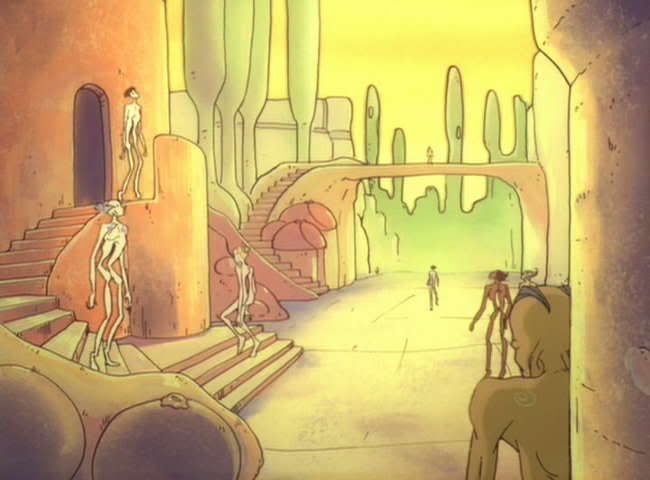 When the f**k do you think this s**t took place?
My thoughts:
Really?? Hmm… Is that why the stories of Aeon Flux seemed… more involved that some stuff I’ve watched over the years? Very interesting.
Peter Chung:
Going back to the mythical level that we were discussing earlier, it's the structure of what's happening - the relationship between the characters and the ideas - not the specific date and location and so forth.
I think a lot of science fiction on film and TV falls into that trap of trying to treat their stories literally. Then you tend to get caught up in a lot of arcane trivia about that world and it seems that people tend to focus on those things. Like, where are the Romulan's from? Or the fact that the Romulans are more technically advanced than the Klingons - and things like that. And Trekkies are obsessed with things like that. And this is the point. All that stuff is fictional, it has nothing to do with anything. You get obsessed with these fictional details, which are really, ultimately, arbitrary.
My thoughts:
Whoa! Slow down there Peter! I think I get what you’re trying to say here! Crap… It sorta makes you laugh. Once upon a time I was totally involved in the 1985 animated series Robotech and I would see people try to explain the most insane things like how a weird flower is able to power spaceships and other high-tech stuff. Then these crazy debates would erupt, without ever reaching a conclusion. People lose focus on the story, the characters; the things that matter – people get too mixed up with what is essentially ‘fanwank’. (Discussed earlier in the blog many times)
 Goddamn, I hate using cliches like this, but I was compelled to.
Here’s another interview about the same topic:
Morphizm:
Do you think it was a mistake to set the film on a specific date in the future?
Peter Chung:
When you nail those things down, the film becomes locked in them and starts to lose its symbolic value. A lot of science-fiction films make the mistake of taking their premise literally rather than metaphorically. The thinking is that it will have more relevance if you nail it down, that it will become unambiguous. But I think the opposite effect is achieved. The more you're able to project your own world upon the work, the more power it has. Whereas if you nail down the time and place, the more you can say, "Oh, this is a story about their world that takes place in that time and that place. It has nothing to do with us."
My thoughts:
Yes, I guess a lot of us hate uncertainty; People hate ambiguity. But that is also why I stuck with shows like Robotech. Look at Starwars and Star Trek – literally every detail of their galaxy has been explained.
I love this comment "The more you're able to project your own world upon the work, the more power it has."
Remember this post about Half-Life? The world 'projected' events in newspapers, radios and posters. Environmental storytelling made the game and piecing the overall story arc together even more satisfying than having everything offered to you in some talky, overlong prologue.
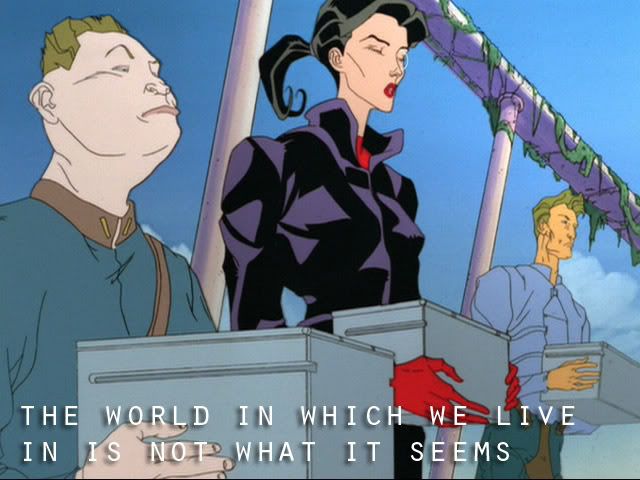 Morphizm:
 How would you describe the world that this movie takes place in? As well as the animated version, if you find serious discrepancies.
Peter Chung:
The world that the movie takes place in is narrowly defined. The majority of the population has been wiped out and the only survivors of Earth are restricted behind this walled city ruled by Trevor, which was never the backstory of the animated series, where it was implied that there was a wider world existing beyond those boundaries. I'm not going to talk too much about the world of the movie, but I'd just expand on that idea that these stories are more meaningful the more you meet them with the language of metaphor.
My thoughts:
In a way, Robotech, being a much more niche franchise, greatly benefited from an almost complete lack of “Geek Fact Book” merchandising (compared to say, Starwars or Star Trek, which has “Geek Fact Books” up the wazoo).
Note: Geek Fact Books could be anything from Role-playing-game Sourcebooks, to Official Companion Guide Books, to various comic books and novels.
Over the years, Robotech fans had to come up with their own explanations for events that happened during the series’ 85-episode story arc, since many of the “official sources” always came up short, or were simply too inaccurate. It was only when the new Creative Director came in and presented his own interpretation as ‘fact’ did the show seem to lose its magic. The series’ creative power was taken away.
I guess what I’m trying to say is, Robotech should never really have taken the Starwars-approach. It relied on so many unexplained metaphors and events that it was best to leave it up to the audience’s imagination and interpretation. A different approach was required for the series… but that opportunity was sadly squandered over the years with retreads and reprints.
Behold, you have witnessed the (to loosely use that term again) power of a multi-layered narrative!
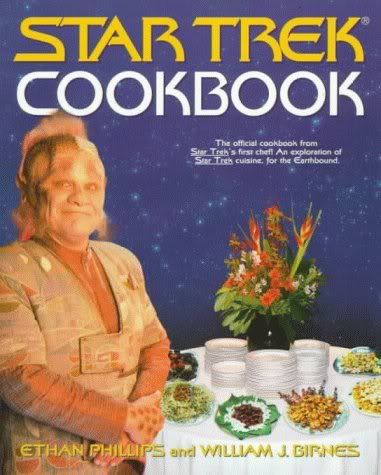 If your favorite science fiction/fantasy series ever plans
on making one of these to "enrich the universe", tell the
franchise/license owners to go f**k themselves.
The interviewer asked a follow-up question about the elements we just discussed... It seems that studio execs actually demanded Peter Chung to add these “geek facts” to his work. You know, arbitrary stuff like a definite timeline, a complete history of the Tirolian / Forerunner / Alien Overlord empire, all that s**t.
DR: Do you find that when you are selling an idea to a studio head, that those are the sorts of elements that they demand of you too?
Peter Chung:
Well... they do. And I think it's a big mistake. They think, for example, that an audience needs that in order to feel grounded. And I think that a lot of viewers maybe do need it, which is probably why a lot of people didn't understand Aeon Flux. But I think that the people that do appreciate it do so for the reason that it's not about creating some fictional world. It's really about projecting ideas that are taken from our world. It's really talking about life as we live it now, amplified.
My thoughts:
That is really, quite beautiful, Mr. Chung. I never really thought of it that way until now. The thing is, I myself like either approach to storytelling. Creating fictional worlds with complete history can be a good thing when done well. Look at works of the great fiction writers like Tolkien, or Prachett, or Herbert. To this day, their rich fictional worlds continue to offer the disillusioned masses a great way to escape this reality (A further study of this is required).
However, It’s good to see that Mr. Chung’s narrative approach reaffirms my affinity for the so-called multi-layered narrative.
So there you have it, my dear Void. I can’t say enough praises to this guy, so I won’t. I’m pretty sure there are other artists who are equally as compelling as our boy here, and I look forward to getting to know em’ better. But now, with all the Peter Chung madness behind me:
A Beautiful Mind: Peter Chung Special Part 2
A Beautiful Mind: Peter Chung Special Part 3
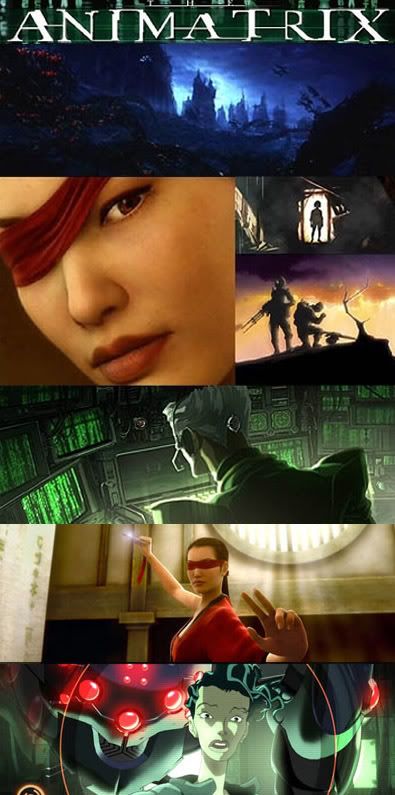
Just when you thought I had run out of things to say about the one and only...
This is one of my final pieces for the ‘Beautiful Mind’ feature, starring Mr. Peter Chung. In the past, I have talked about the process in which Mr. Chung went through in developing his baby, Æon Flux. I will continue that with a brief look at his involvement in the production of the Animatrix short, ‘Matriculated’, one of the most under appreciated pieces of animation since Black Cauldron (Oh wait, that one sucked). Irreverent references aside, Mr. Chung’s involvement in the now-dead Matrix franchise proved to be quite interesting. Here’s what he had to say from some old interview in various American Otaku rags.
The story of Chung’s involvement in Animatrix:
In April 2001, I heard about the project through Madhouse Studios, as they were starting production on their two episodes, Program and World Record. I found out that some of the top Japanese animation directors were making short films based in the Matrix universe, and I wanted to have a chance to get involved. I called a producer at Warner Brothers Animation, who conveyed my interest to the Wachowskis. I was told that all the directors had already been chosen, and there wasn't a slot open for me. I tried to forget about it, but a couple of months later, I got a call telling me that one of the original directors had left the project and the brothers wanted to get me in. So I was in.
Interviewer: What are some of the fundamentals that inform your style and how have those dynamics been expanded over the years?
Chung: "The two fundamental approaches are clarity and expressive design. This is in contrast to artists who place greater emphasis on atmosphere, lighting and texture. My writing is concerned with complex characters and moral ambiguity, so I try to keep the visual representation clean. Complicated stories told in a complicated style would only end up being confusing. The descriptive approach is favored by artists like Moebius, Herge and Darrow and by filmmakers like Kubrick, Hitchcock and Tati, all of who I'd say are important influences."
You know, I gotta check up on those. Maybe this 'descriptive approach' to storytelling is something I really got to get into. Otherwise, I'd probably end up writing an overly complex story that shift back and forth in time, all the while telling a complex psychological story about a man and his favorite little toy. Or equally as confusing and pointless.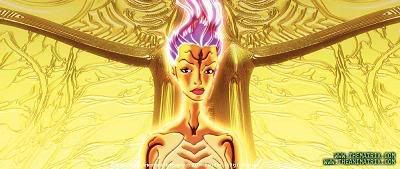 Interviewer: What kind of creative tension is there when you step into someone else's creative universe? Did the notion inspire you on any particular level, or were there difficulties in realizing a particular vision against the backdrop of established ideas?
Chung: "In the case of The Matrix, there was a good deal of stylistic rapport going in, Some people have told me that seeing The Matrix made them think of a live-action Æon Flux Movie. The setup of the Matrix universe implies a lot of situations, and I actually wrote several possible scenarios before settling on Matriculated. One idea that intrigued me was the ability to manipulate virtual time - or the expansion of the "bullet time" concept. Another was the effect on personal trust in a world where anyone you encounter might be an agent.."
My thoughts: Incredible. What fascinated me most of Mr. Chung's response is the mention of the 'implied situations' in a story. Yeah, there goes that whole 'Multi-layered' narrative crap I keep yapping about. That's also one of the reason the first Matrix was such a blast, and also why so many of those 'unofficial' Matrix Guide Books came out. When you have that audience participation, for geeks to come up with there own insane interpretations, and to actually put up a book about it, then you've got one hell of a property. Robotech also has this gift, of a multi-layered universe, but of course, that potential was squandered for more than twenty years with people telling and retelling pointless events in certain story arcs. Interviewer: What advice can you give to all of those aspiring animators out there?
Chung: I'm guess that those reading this interview wuold be inclined under the Japanese influence. My advice is to look at and study all formes and style of animation, as well as the great live-action filmmakers. Remember that animation, as its root, is not tied to a particular style of dawing or character design. Study and practice the basics, and you'll be able to apply them to any medium and any style.
My thoughts: Hence the blog. Honestly, I wouldn't know the art of Dave Seeley, Craig Mullins, Luis Melo and so many more inspiring artists without the aid of this place. Thank you blogger! And thank you Peter Chung!
And now I shall talk again again about Æon Flux. Woohoo! Don't worry, I really learned a lot typing this. You might too. But before that though, lets take a break and watch this short, yet awesome trailer for an old videogame animated by none other than Mr. Chung himself. It's senseless and intense and ultimately cool. In my opinion.
Referenced from mag:
One of the interviews glossed over Chung’s reaction to the loss of popularity of Æon Flux after it became a series. The following quotes from Mr. Chung simply confirm the fact that American television, for some reason, simply isn’t a place for anybody to realize their true creative vision. Like any industry that continues to exist today, it is fueled by greed, ignorance and ‘design by committee’ crap. “When Æon Flux was on Liquid TV, it was being done very cheaply and therefore with a great deal of freedom from network scrutiny. Once MTV began investing in earnest, I came under a lot more pressure to tone down the content, for the sake of the censors, and partly to appease the sponsors. Even so, the series attracted a new fanbase which actually preferred the later episodes.
Although the production period was arduous in the extreme, in the end, yes. I took it on as a challenge to expand the range of the animated series as a medium for personal expression. And I think we succeeded in most instances. I'm especially pleased with having created a truly complex main character in Aeon herself. I also realized that serial television is not the outlet for the kind of animation I want to do. There are just too many compromises one is forced to make.”
It’s interesting to note that another ‘controversial’ animator that went through the hellish waters of network television was John Kricfalusi of Ren & Stimpy fame. His work had to constantly be toned down to please watchdogs, execs, etc. (Of course, a lot of other folks go through this, but I think I’ve made my point) An interesting about John K. was that for despite Nickelodeon ending up with a ‘distilled’ version of his show, he did mention that he was able to at least get one or two elements to the show that were part of his original vision. That offered him, and for a lot of artists some satisfaction in the tedious process of their line of work, especially to Mr. Chung.
A few years later IGN.com, conducted an interview, which dealt with the re-release of Æon Flux. It’s an interesting retrospective look at the show, and offers some interesting insight. You might not care, but I do.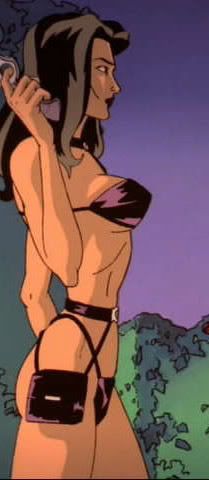 How tough is it to relinquish control over something like this you created and is now in the hands of other people?
Chung: “Well, you kind of just have to accept the way that it is, which is if you want your show to be on the air… when you develop a show for a network, the deal is that they own it. You know that at the outset, and that means that they could go and take the character and do what they want with it later on - they could do an animated Aeon Flux on Nickelodeon, 'Aeon Flux: The Baby Years', anything they want. But it is a trade-off, so you get your work exposed to a big audience on MTV, and in exchange you have to give up some control.”
My thoughts: Aside from these legalities, Mr. Chung was asked other issues he had to face during production of his now toned-down series. And how these issues actually became opportunities for storytelling. Again, we dwell in the land of the fickle censors.
Chung: “… In some cases I think that the episodes do suffer; you should listen to some of the other commentaries, where we talk about that a little bit, where something that we had wanted to do.
The standards and practices people wouldn't let us, like for example portray a character's death that was crucial to the story and not being able to really show it. But unlike a lot of animators that I know, I never really made that too much of an issue, because I've worked in TV animation a long time.
I think that having this outlet to begin with is a great gift, so I tried to take advantage of all of the things that I could do and try to find ways of getting around them that are often more interesting than outright showing something. Like sexual events (laughs), let's put it that way; obviously you can't just show outright explicit sex, and I'm not sure that I would want to either, but getting that element in there in a more suggestive way is something that I think we managed to do and do in an original and provocative way…”
My thoughts: Would that make the world better? To have the airwaves were filled with cartoons dealing with mature issues without the sugar-coating? Ah, I don’t think it will ever happen in America. The laws are too strict. Although I do remember that Spawn cartoon... That was okay, I guess. Although I did hear people saying that the show wasn’t all too successful in that aspect. Anyway, I’m derailing this…
Chung: ”The whole show works on a metaphorical level, and that's really what I would want to stress - don't take any of this literally, please. There's a lot of discussion on the part of fans, you know, what is the back story, and how can she keep dying and coming back. They want some kind of literal, logical explanation, and the story doesn't really work on that level, and I don't think it should, being an animated show. Animation in itself is not a realistic medium, and I'm not interested in trying to duplicate reality but more like a projection of internal states - that to me is what it's all about. It's all about mixing the internal with the external, the subjective with the physical, sop you see the projections of people's minds take physical form, and they interact with them, and that was really my approach to it.”
My thoughts: This leads to an interesting viewpoint of Mr. Chung about how people try to develop these almost “unnecessary” back-stories to characters and events of a particular show. More on this later.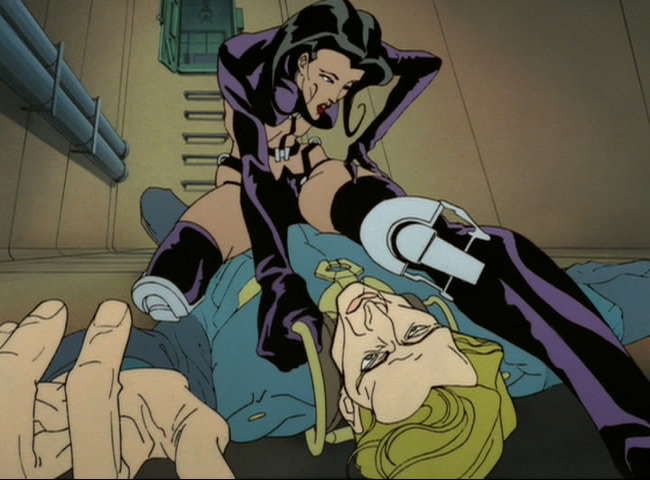 IGN then asked Mr. Chung about whether or not he felt he was able to realize his creative vision more fully in his later animation projects. Did he??
Chung: “Yeah, in some instances. Like The Matrix [short "Matriculated"] for example, the Wachowskis had been fans of Aeon Flux and so when I approached them about doing an episode of The Animatrix, they really wanted to be involved, and I get a lot of requests from ad agencies where they want 'that style'. (The multi-layered narrative flow, the metaphorical wackiness –ed)
“At the same time, maybe in a few cases it's also been a liability, because I think that Aeon Flux is very much perceived as a cult show with a very specialized audience, even though I never set out to make a cult show. I mean, I thought I was doing something for everybody. But you don't really have control over that (laughs)...”
My thoughts: See my definition of a ‘cult show’, or why I toss it around like an idiot below this post.
Chung: “…but most studios will say, "we really like the way you do things and we like your design style and directorial style, but we'd like you to apply it to Batman" or something like that. But I'm not interested in making animated films because I need to keep making animated films. I don't even like the process of doing animation, because it's a laborious and painstaking process.
To me it's all about the content, so when somebody says, "we need you to apply Aeon Flux style to this story idea," I kind of go "that's not the point." I developed the style so it would tell these kinds of stories in an effective way, not the other way around. I'm not coming up with a directorial style that you can just kind of apply to a conventional story.
I’m trying to wrap my head around what Mr. Chung’s saying. Can you apply ‘audience participative’ style storytelling to a clichéd story? I’ll leave that answer to the Void. Who doesn’t give a crap. And with that, I end that interview and I also end this part in the on-going and fairly wonderful-yet-for-some-of-you-it-may-be-tedious saga of PETER CHUNG: BEAUTIFUL MIND!
I’m gonna take my sweet time with the final analysis for this feature. I’m now wondering what else can I say in this wretched blog… Perhaps a feature on… ah! I know! I'll say that Binchou-tan is super cute!! Kawaii! Now watch this old featurette. It's an oldie, but it sure looks nice. And, its sort of related to today's topic.
Addendum:
My "wrong view" on what makes a Cult Show:
Here’s how I define ‘cult shows’. A lot of shows marketed to the mainstream back in the day are now considered “cult” shows. A prime example is Robotech, which supposedly was a big, big thing once upon a time. Carl Macek introduced three different anime series and repackaged it to Robotech for American audiences. It was big, a kids liked it. Nowadays, you can only pray people actually give a damn about the franchise. With so many modern day distractions, the show has essentially been forgotten by generations of anime enthusiasts. Only the hardest of the hardcore give a flying bleep about Sentinels or something. Robotech has then become the penultimate example of what I would call a ‘cult show’ with a ‘specialized audience’. Not many people give a f**k about what Commander Leonard has for dinner, I’ll tell you that. (I care!)
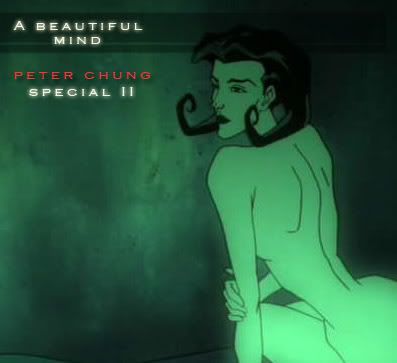 Talking about Peter Chung's career based on his past interviews is tough. But this is probably the best way to get to know the guy. You think you can know someone based on his or her work, but no, there truly is something amazingly different about this guy. About the only person I can think of with a creative thinking that's just as unconventional and controversial as this guy is John Kricfalusi, of Ren & Stimply fame. Peter Chung and John K. are guys whose cartoons made waves in the 90's, pushing envelopes and crap.
Regardless of whether you like any of these guys or not, their works are still... unique. I mean, gosh, look at this episode. This is an Æon Flux episode starring Æon, her female partner, and the bleached-hair dude Trevor Goodchild tryign to escape this off-shore oilrig. You may have to watch it several times to at least get the story because there is no frickin' dialogue. Peter Chung actually told these crazy stories without any dialogue! Watch:
Anybody got that? Crazy, huh? I may have just begun unearthing a lot of classic and weird American and Japanese animation, but never have I seen something as wicked or as intellectual as this. In animation, no doubt. I like it when directors tear down preconceived notions about stuff.
An old interview by Emru Townsend and Peter Chung:
Emru Townsend:
"I liked that undercurrent of people always being watched by somebody. There's always some camera, some person, some... thing floating around just looking at people all the time..."
Peter Chung:
"..obviously, and I was interested in making the dialogue somewhat mysterious. And the idea of people knowing that what they were saying was being observed, and recorded, and monitored, made them say things which weren't necessarily what they were thinking.
They say things that they want other people to hear. In other words, you sort of have to interpret what people are saying, as well as what they're doing visually. So dialogue became another layer of stuff that you had to figure out."
Eh? An American cartoon that wants me to think? Wants me to interpret things visually? But I am so used to directors spoiling things for the audience! So used to villains spelling out their intentions, for heroes to speak as if he or she is talking down on the audience! Blashphemy!
Emru Townsend:
Æon Flux was one of those shorts that I found you could look at one way--you know, people can just look at it and say, "Wow! People shooting each other!"--this is in the first and second seasons, of course--but you can look at it another way, and really look at what's happening, and say, "Ah, okay!", like the one with the elevator running between five different floors. That one's great. (episode posted above this post)
...You sit there the first time, saying, "What? What?!" And you get the obvious joke at the end with the plug, but when you watch it a second time, you catch all the little details, you go, "Ooh, I see!" Or the one with the video camera where she goes to assassinate the guy in his house.(episode found in the bottom of the first part of Peter Chung Special) It took me three times to watch it before I really paid attention to the time on the camera, on the videocassette, and on the clock. Then I realized, okay, this is what she's doing now, this is what happened a few minutes ago, and so on and so on. And after all that it fits together perfectly."
I will have to rewatch that actually... But Peter's next reply is a sensible one. One that many people in the creative industry also struggle to maintain.
Peter Chung:
"It's a delicate balance to get, because you can turn people off by confusing them, and just get them to disengage totally, which is not what I want. The strategy really is to get them to feel encouraged to pay closer attention. So far the response has been pretty good... I mean, the idea with the series was that MTV wanted to reach more of a mass audience as opposed to sort of the cult following that the shorts had had. But I wasn't really interested in doing something formulaic in the way most shows are. I..."
So there. You can see how this turned out... The trend never caught on. A lot of mainstream American animation (Remember: Æon Flux was being marketed as mainstream) is still catered to simpletons and pre-teens. Stuff like this 'Robotech: The Shadow Chronicles' movie perhaps. You know, kids stuff. The kind of adult-style visual narrative, audience-participation kinda thing usual exists only in that indie/underground stuff I have no idea about. It's a shame really, but yeah, that's how the market works. No wonder the ads of the anime Paprika were mocking this 'preconceived notion'.
Here's how Peter Chung combated that 'notion'. Peter Chung:
Well, you know, I'm fairly realistic about that kind of thing, I've worked in the animation industry for about fifteen years, and, well, the character was really designed and conceived to be appealing, to be appealing on a visceral level, so that even if you didn't understand what was going on in the story, she'd be fun and entertaining to watch...
Emru Townsend:
The skimpy outfit doesn't hurt, I suppose.
Peter Chung:
Yeah, exactly. It's just very loaded, visually, to anyone who's even paying even a casual glance at it. And that was my strategy all along, to tell extremely abstruse and kind of bizarre stories that were fairly non-commercial, fairly personal, with a character and a surface that was very appealing and accessible. I think a great deal of the time, MTV didn't really know what it was that they were buying [laughs]. But the fact that it looked neat and was fun to watch was enough.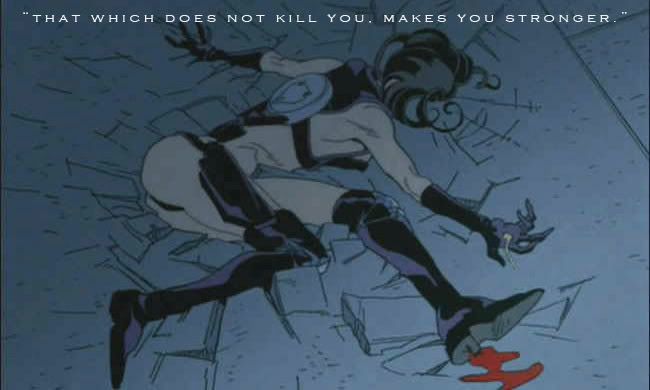 "..the consistent thread throughout all of those shorts in the second season was that she dies in each one. And she not only dies, but she fails to accomplish what she set out to accomplish in each one. In part, it was a response to my frustration to always seeing it being taken for granted that the protagonist would succeed in what they were doing and also survive in the end, which I think makes a lot of shows or films very... well, dishonest I guess is the word. Because they play this game of putting the hero in this life-or-death situation where you know they're not going to die, but the filmmakers sort of play this game of, "Well, he could die, at any moment...
What I was interested in doing was exploring different aspects of a character's death, and each one of the episodes was really about different aspects of death. That's what I was interested in dealing with.
The elevator episode, for example, was really--to me--about how she sets out to do something, she dies in the middle of doing it, without having finished, and somebody else picks up the thread, and not understanding what she was trying to do, kind of screws things up. Sort of a nightmare scenario for anyone who's engaged in some kind of ongoing project, to think they're going to die in the middle of it without finishing it, and somebody else is going to finish it for them."
It's statements like this that can turn a man, into a fan. (or a disgruntled jerk) Would they allow it if Spongebob kept getting whacked in each episode by a murderous jellyfish? Probably not.
"The look of Æon Flux is very much along the lines of Heavy Metal, other European comics, and whatnot. One thing that I've heard often from people who watch it is that it's very Japanese animation-influenced. Personally, I don't see that at all, I tend to see it more along the lines of European stuff. Which do you figure influenced the design more? Or is it just a synthesis of all the things that have been percolating in your head?" (More on Heavy Metal in the future)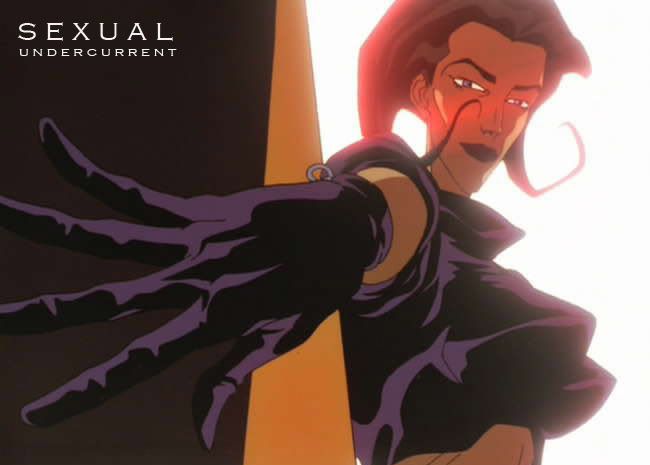 Well, that aspect of her was fairly vaguely defined in the first series of shorts. In the new episodes, which is really where my mind is at the moment, she's been defined in the series bible as a dominatrix. In the first episode that you saw, she receives a client who comes and gives her a pedicure and starts licking her feet...
That's what she does in her spare time. She receives clients and dominates them. Otherwise, the way that that works in the show is that we're not allowed to show hardcore genital penetration shots [laughs] so to get the sexual element into the show we sort of have to use a more kinky approach to sex.
I mean things that wouldn't normally be sexual take on sexual innuendo. I try to come up with substitutes for sex organs. Obviously, something like a gun is a sexual symbol. But in episode three of the new shows, one of the characters has a spinal injury, in which one of her vertebrae is removed, and there's a gap in the middle of her back and it becomes a sexual orifice.
Yum-yum!
Emru Townsend:
Man. Is this in any way related to... In the "alien egg" episode in the second season, Æon is walking around and she goes to the closet and she finds Trevor in this gear licking something. Now that, to me, looked like he was in some kind of bondage game. Is that what's supposed to be happening, or is it just far too weird for me to comprehend?
Peter Chung:
Yeah, well, if you notice, her kitchen is lined with a lot of different cabinets.
Emru Townsend:
Oh, God. There's a different person in each one, isn't there? [laughs]
Peter Chung:
Yeah.
I feel sick. You know that? Did you see that episode? Refer to my first post on this. Jeeezus. So that's the end of Part II of the Peter Chung special. If you enjoyed this post, please tell me! If not, then I will begrudgingly continue with a post on the irrelevance of Robotech in the modern world. Again! Hahaha!
I close with this commercial work by Peter Chung. Will she, or won't she?
 Peter Chung. He’s the kinda guy that thinks out of the box. The guy who does stuff that has ‘unmarketable’ written all over it. Okay, I was kidding about that last bit. But honestly, did anybody besides Peter Chung fans enjoy the extremely underrated Animatrix’ animated feature ‘Matriculated’? (Animatrix is the animated tie-in to the Matrix Trilogy franchise)
Well, I liked it. At first, I thought it was the weakest (or weirdest) of all the features in the Animatrix series, but I realized it was the one with the most… depth. Multiple viewings afforded me a better understanding and appreciation with the characters and the setting. That’s the beauty of this whole ‘multi-layered’ narrative. If done right, you get achieve mainstream hits like Robotech (the original 1985 animation) and Half-Life. Works like Matriculated are of the same narrative fold, but in my opinion have a more acquired taste.
So lets talk a look a look at Peter Chung. His career started way,waaay back in the 1990’s, with his breakout hit ‘Aeon Flux’, but like his works, the story is much deeper than that.
A brief background about Peter, straight from the horses’ mouth.
Peter Chung:
"I was always into animation. I studied animation at CalArts [California Institute of the Arts]. I've actually been making animated films since I was 16. It was always what I wanted to do and I got my first job when I was 20 and I've been doing it ever since. I always knew that what I wanted to do was to create characters and write stories - do the whole thing, you know, write, design and direct. It took a while. It took about ten years of working in the industry doing other things like learning the craft, doing storyboards and designing characters, before I finally got to write and direct my own character which was Aeon Flux."
Wow. And I’m 22 and I have a career that is nowhere near art-related, and I continuously talk about modern visual culture in a place where... err… moving on.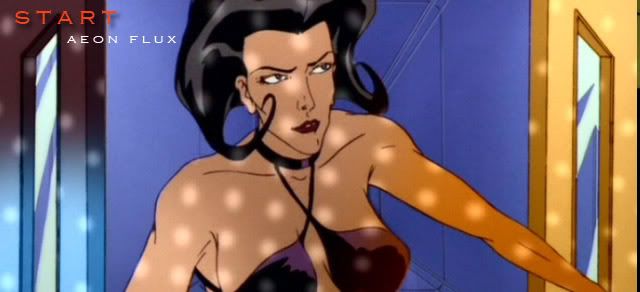 Peter Chung's has had a long, successful, though frustrating career. Based on what little I could read about the guy, it almost seems as if he hasn't worked on anything he really enjoyed since his breakout hit Aeon Flux. Oh sure, he's done the occasional commercial work and animation jobs for big Hollywood and Animation studios, but I wonder if, given the opportunity, he could create something as amazing as Aeon Flux.
Alrighty then, what the hell is Aeon Flux? Is it some character played by Charlize Theron? (Hell, no) I'm assuming you don't know, reader person. While I would be glad to reference Wikipedia again, as I always had in the past, I want you, dear... person... to experience it. What is Aeon Flux? Aside from being a show back in the 1990's, what exactly was it? Here's the intro: