
All of you students and aspiring artists out there looking to break into the art/media industry... read this article. It might just give you the mindset to survive. Here's an excerpt:
We know you've been working very hard on your screenplay, but before you go looking for some professional feedback, you might keep in mind the following piece by A History of Violence screenwriter Josh Olson.
I will not read your fucking script.
That's simple enough, isn't it? "I will not read your fucking script." What's not clear about that? There's nothing personal about it, nothing loaded, nothing complicated. I simply have no interest in reading your fucking screenplay. None whatsoever.
If that seems unfair, I'll make you a deal. In return for you not asking me to read your fucking script, I will not ask you to wash my fucking car, or take my fucking picture, or represent me in fucking court, or take out my fucking gall bladder, or whatever the fuck it is that you do for a living.
You're a lovely person. Whatever time we've spent together has, I'm sure, been pleasurable for both of us. I quite enjoyed that conversation we once had about structure and theme, and why Sergio Leone is the greatest director who ever lived. Yes, we bonded, and yes, I wish you luck in all your endeavors, and it would thrill me no end to hear that you had sold your screenplay, and that it had been made into the best movie since Godfather Part II.
But I will not read your fucking script.
Go on. Read the full article http://blogs.villagevoice.com/runninscared/archives/2009/09/i_will_not_read.php?page=1
Now replace what you've just read with the specific artistic/design field you're working on and you're good to go. The article was reposted at ConceptArt. You might find some good responses there to answer any artistic turmoil within you.
http://conceptart.org/forums/showthread.php?t=168616&highlight=I+will+-read+your+fucking

Puzzled by how color "works" in some paintings?
Curious as to how light affects objects??
Look no further.
http://www.huevaluechroma.com/
Disclaimer:
This site assumes you have some knowledge on the basic principles of color!
Thank you, David Briggs!
While it's been a while since I've posted on this blog, I managed to stumble on a topic at ConceptArt.org that demanded my attention... Yes, it's everybody's favorite topic - the cliches of science fiction and fantasy art!
 The topic today is brought to you by J Wilson. He asked:
It's not that he hates all these generic ideas! On the contrary, these so-called generic ideas are a great starting point to create something inspired, possibly original even! But as J Wilson pointed out, he's "...just tired of seeing them as "go to" design elements, showing a certain lack of real inspiration. They can be done well, and done in an exciting way, but 90% of the time if I see those elements I groan and kind of roll my eyes."
So, what designs are people tired of seeing? Let's see what the good people of the forum have to say:
J Wilson goes first, declaring :
"I'm getting tired of seeing generic looking gun arms. Or the one big powerful arm. Tribal tattoos. Forest or jungle scene with large stone heads overgrown by the jungle."
 Young, impressionable artists such as myself can't resist recycling old favorites in their respective genres... Are we really bankrupt creatively?
Flake, another discerning member of the board, throws in his thoughts:
- Giant Space Boots
- Swords 8 feet longer than the user / hand held artillery
- Bikini armor / Stealthy ninja chicks in heels.
I don't get his second one, really... Did this whole 'sword bigger than the user' trend begin with Final Fantasy? I'm not too familiar with this enduring trend in young artist's design. Never really liked it actually.
Massively over sized boobies...
Rob Liefield cliches
Scantily Clad Women in snow (I am guilty of that one myself)...
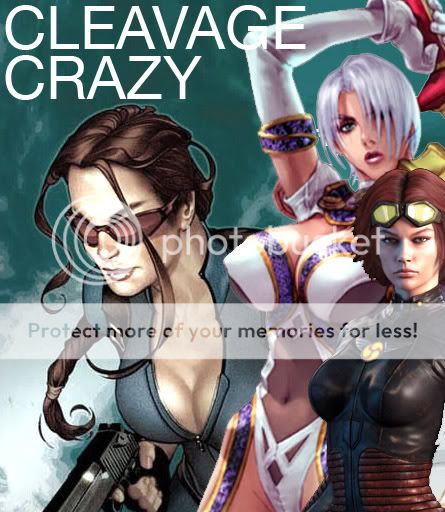 Thank you, professional concept artists of old, for giving the public what they want in the first place, but somehow in retrospect seem to regret...
Mirana declares her annoyances:
Most clothing choices for gals, usually a variation of the bikini or a plug suit (Damn you, anime shows like Evangelion! -ed) Laaaaaaaaame. I'd also like to see variety in body types of women AND men.
Amaranth goes straight to the point:
"Female supermodel soldiers. I highly doubt Paris Hilton or a female with double Z breasts can wield a huge sword or gun in full-fledged combat even though they look good. If functionality and looks are both considered, they could at least look like Gina Carano. Of course, I can't say I am absolutely sick of this, just slightly annoyed."
 Practical.
...Bikini armour. This one I'm sick of. It looks good but I think it's too much of a "go-to" design to make females in armour look good, not to mention it completely sacrifices any functional purposes. How is it hard for anybody to just slash the stomach area of the female?"
Zirngibism comes up with a perfectly worded rant:
- That same old floating city where underneath the city is sort of a long upside-down mountain of earth. Yeah it's been done in some popular video games, and yeah it's kind of a cool concept, but aren't there other ways to make floating cities without that giant mountain of dirt under them? How about spheres with their own gravity and the city radiating around them? How about floating water instead of earth with steel "bubbles" inside as the buildings?
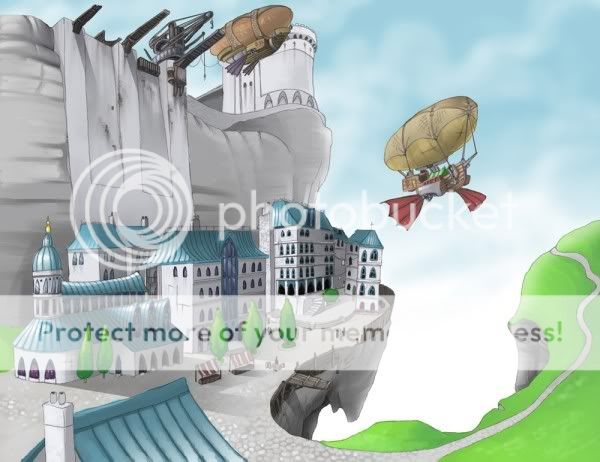 Epic, right? Blimps? City from Lord of the Rings? Floating rocks? Mix all together and what do you get? I'd rather not say...
- Desolated, bombed-out post-apocalyptic cities
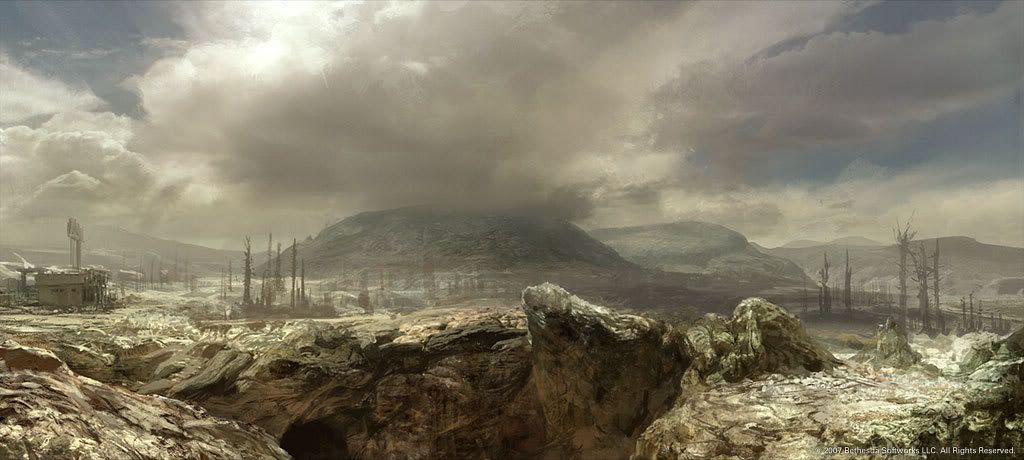 Post-Apocalyptia done right with the 'Fallout' game franchise. Great concept work can be found here.
- Jetsons-style cities (I really love futuristic cities in illustration, and they're my favorite when approached originally.) I feel like a hypocrite because so many cities are in my deviantArt favorites folder, but hey...
- Big blobby monsters with arms coming out of their stomachs, possibly plants growing out in random places, with flabby sagging bits. I've seen some really awesome drawings of these, but the concept itself is getting old to me.
- Gunners with visored masks.
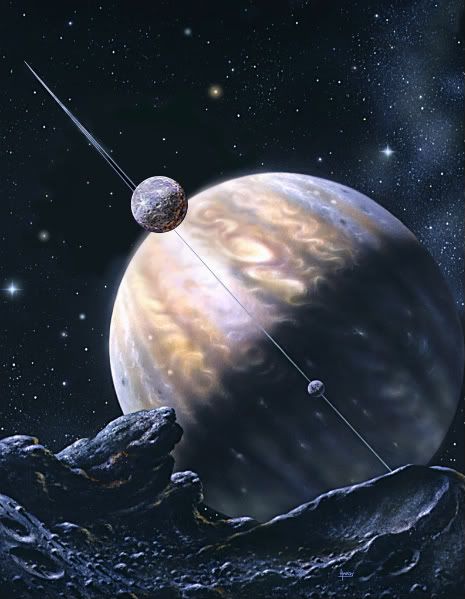
- Most Space Art... you know, often-desktop art where two planets are colliding and there's all this swirly stuff from brushes people downloaded from deviantArt... It all looks the same. Sure space is cool, but not that kind of art when it's all the same. It's like Thomas Kinkade, just in space. Go to dA, you'll see what I mean.
 Spider mechs (one of Masamune Shirow's favorite design fallbacks), nearly all heavy bipedal mech designs known to man, and much, much more!
- Mech warriors that look like so much like Gundams. Sure, as humans we identify with bipeds. We like stuff that reminds us of us. But that's not really a great design when it comes to machines. Especially when they're SO top-heavy like some of the designs I've seen. How about multiple legs (like that "bigdog" robot they're developing now), or or the use of both wheels and legs?
- Just about 95% of sci/fantasy illustration I see features people ages 18-25. Sure, I understand why this is. We don't usually see 60-year-olds fighting battles and what not (unless they're a male wizard, often cliched). But in a place and time where magic or technology play a key role, I would think people could transcend the limits of age. By the way,I think older people are awesome, there's so much more depth to them. I plan to try to feature them in my own illustrations. I guess the audience of such art tends to be in the younger range and identify with younger characters... but still.
- Little children interacting with large, ugly monsters in friendly gestures, like they're a friend. The child might be giving something to the monster or touching it. It's a neat concept and I've seen some great work portraying it, but seeing a lot of the fanboy art using this concept makes it seem a little old now.
- And I've got to agree with everyone about the bikini armor being one of the biggest ones. I don't know, I'm not a guy, but don't you guys get BORED after awhile, even if you're attracted to the girls in that art? Don't they start looking the same to you?
- Tribal Sci-fi. I still think they are cool when done-well, but it's getting kind of generic.
My thoughts:
I can't believe he doesn't like gunners with funky visored masks. It's a good thing for some that the generic cyberpunk era died in the 90's... although a revival could always be around the corner. As for the rest of her statements, I think they're spot on. That's all I can say really. Totally agree with the first statements though, I can't help 'fave' well rendered generic floating city art!
sodAP gives his views on:
- Derivative of the derivative. Some guy who has no idea how real XV century armour looked like, so he draws what he thinks it could have looked like (why research?) and then there's the other guy who has no idea how real XV centruy armour looked like so he bases his work on the work of the first guy. There's the third, fourth, and fifth guys, and then World of Warcraft tier 6 armours appear. Oriental+Occidental. Guys with full plate, a bandana and a katana... facepalm.
 I'm going to say... inspired. And sexy.
PsiBug goes on with his own caveats:
1) a lone timeworn robot standing among the ruins of the civilization that created it. (Wall-E, Laputa)
2) a close-up of an embryonic creature gestating in a bottle of bubbling fluid
3) a skeleton in a space suit... often with an alien weapon or plant sticking out of it
4) an old lady chasing a cat down the street with no bra on (What? -ed)
BrightDreamer has this to say, which is pretty interesting:
- Impractical anatomy: the overly-musclebound barbarian who should go down with his own weight, or the DDD-chest-size woman who thinks she can run, let alone fight, without a bra.
- The Brooder. You know the one. Crushed by the weight of their own soul in a dark and unforgiving universe, they stare darkly inward whilst pondering the void of their reality. They often wear dark capes and/or trenchcoats, sometimes some manner of hat (to cast moody shadows over their moody faces), and most need their hair hacked off, or at least brushed out of their eyes. While I understand that many sci-fi/fantasy characters have good reason to brood, I get sick of watching them do it so incessantly, especially when they seem to pick such impractical places: the edge of an impossibly high skyscraper or craggy, storm-torn cliff, or even in the middle of a gory battlefield.
- The Generic Epic Quest. A gathering of vaguely Tolkien-esque humanoids in a range of sizes and shapes and vaguely medieval outfits travel through a Vast Landscape, more often than not passing Grand Ruins and Soaring Spires. A side-cliche I find overdone is the Generic Epic Quester, someone on some manner of generic epic quest who might as well be on a nature walk for all their posture and expression conveys.
Wickeddiana has thing to say... which I unfortunately agree with *sniff*:
- Pretty much everything from Heavy Metal Magazine. I am totally sick of seeing this. Probably the biggest cliché in erotic fantasy art.
- Ethereal fairy-like females in some kind of magical environment/forest. They are usually very beautiful, almost goddess-like and they are gazing dreamily out into the distance. I have to admit that I am guilty of having done this myself. But I just get really tired of seeing it.
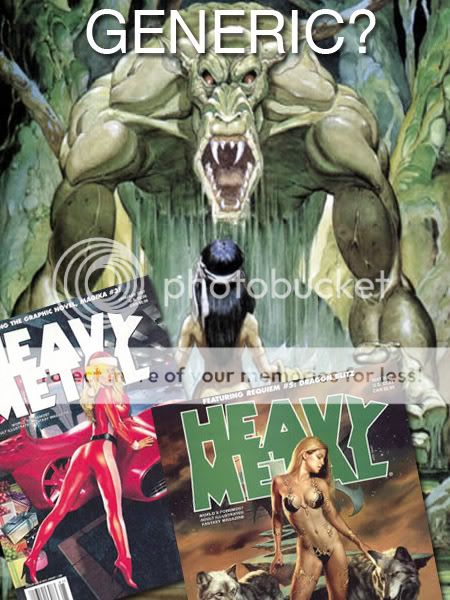 Raaawrrrr! Which reminds me, I have to do a piece like this for my portfolio. Bye!
Mr. Kev Ferrera throws his hands down and declares boredom over:
- 96% of the covers to Heavy Metal.
- Post-Apocalyptic Beach Bodies.
- Main figure strikes and holds an iconic yet undramatic pose for the camera.
- Huge swords. Overly pointy armor and helmets.
- Over-rendering of incorrect or meaningless anatomical detail.
- Incorrect cultural references - including no knowledge of the mythology or symbolism used, appearances (vikings didn't wear horned helmets to war), political stereotypes, and especially the use of writing in random ways!
- Making vampires and werewolves mortal enemies. In a folklore sense, they have absolutely nothing to do with each other.
 Right...
Opillione finally closes out this post with an all-encompassing reply:
"I take the opinion that everything's been done in some form before. It's not what the content is, but how it's executed. "
In Conclusion:
The question now is, how do you create fresher ideas? With every idea known to artists taken and exploited, what is left?? I leave that to you, or maybe to me, if I find the time to make a post about developing new ideas for well worn concepts. In the meantime, I suggest you guys stay away from adding scars over you over your characters eyes. It's been done before, trust me.
 "No Art Director Ever Asked To See My Diploma"
The education of many a successful illustrator takes place quite handily outside the bounds of any certified program or academic course of study. The most important, perhaps only credentials of any significance in this field are the portfolio. While a portfolio of student samples may be quite handsome in presentation, it is rarely an accurate indicator of one's ability to effectively solve actual problems, under true deadlines while the exigencies of real life intervene. It is no wonder that school work is quickly purged and replaced by assignment work as soon as possible in the portfolios of those fortunate few to get work. If the ultimate goal is to distance oneself from all traces of "school," something more than a diploma must be offered to those who intend to work in the field rather than simply go back into teaching.
 An online portfolio template. "There are thousands like it..."
An honest appraisal of the odds might be a good place to begin. Although it might not be the biggest boon to enrollment, letting people know just how competitive the field of illustration is would certainly help sort out those who potentially have other or better options. Illustration as a career is most successfully pursued by those to whom no other option is acceptable. It takes that kind of motivation to overcome the inevitable and constant stream of obstacles. Some frankness about the nature of the illustration market and the people an illustrator will have to work for would go a long way in discouraging all but the most foolhardy and desperate from pursuing this glamorous and enviable career.
 Good luck! This artist gig better be what you want...
Every illustration student should know that even the most brilliant art director, say one who can dial an entire phone number including area code without having to look it up again, actually believes he could do your job if he wasn't so busy. While fostering the ideal of creativity, perhaps we could also foster the reality everybody remotely involved with your illustration feels perfectly comfortable taking credit for it.
This next item may seem like a very odd notion for institutions of higher learning but, how about showing some respect for students and some recognition for what they already know. Rarely will a nascent illustrator have arrived at college age without already having worn out his share of pencils. Don't treat him like he just hatched and for heaven's sake do your share to put an end to this myth of "artistic talent" which fosters such deep contempt among the lay public for those "gifted" souls who appear to have it so easy. True artistic talent is the ability to pursue your goals and not give up until you succeed, whether it is on the second or seventieth try.
 "The Poor Poet" by Carl Spitzweg (1808 - 1885) Click the image to learn more about the hidden symbolisms that depicts the so-called "Starving Artist"
While we accept that most people can be more or less literate with enough effort, we are still rather behind in recognizing that the same thing applies to visual expression. A little less emphasis on inspiration and more on perspiration would seem to apply here. While it seems that working illustrators would be the obvious choice as illustration teachers, the axiom "those who can do and those who can't teach" may have actually been invented in the illustration field. Rarely do you find an illustrator who actually has teaching skills, can find the time and regards students as more than just potential studio interns. All too frequently what you get are semi-illustrators with too much time between jobs and underfed egos.
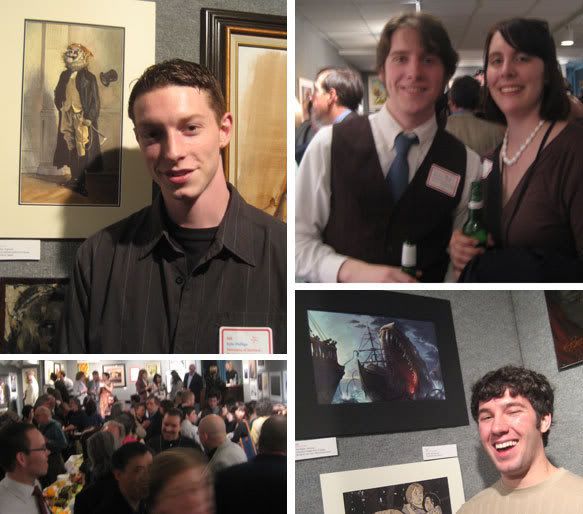 This image was taken from popular art blogger/critic Irene Gallo regarding one the 2007 Annual Scholarship Competition
 The gruesome result of this ill-advised practice is the annual scholarship competition, where we honor the "best and brightest" for their pitiful imitations of illustration styles of the past. The crowning irony of this grotesque spectacle is the mention of these instructors in the exhibition credits, ostensibly, I guess for doing such a laudable job of helping students deny their own individuality. The next generation of great illustrators will come into being despite this circus but, it would be far less degrading if we didn't treat them like little monkeys.
Imitation may be the sincerest form of flattery but, ethics aside, it is primarily the province of bottom feeders in the illustration field. Give a student the ability to imitate Bernie Fuchs and you've given him a good shot at the CA Illustration Annual for 1974, give him skills to negotiate, promote and run a business, and he may actually be able to make a living. Enough with this baloney about oil washes and techniques of the "great masters."
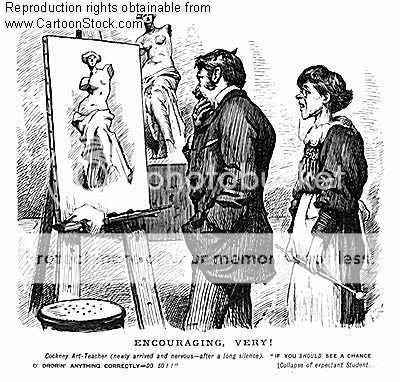 There is a great deal to learn from the history of illustration but, it ought not be confused with technique. True style comes from within not from copying someone else. It is not disposable nor a fad of the moment, ie. the fashion industry.
A good device for remembering what's really important here is the three "D's," drawing , drawing and drawing. Drawing from life, drawing from memory and drawing from inspiration are good. Tracing over photographs doesn't quite get it and plays you right into the hands of those who have no respect for honest effort in the first place. Illustration is a business, not to be confused with fine art, which is also a business (only a much more complicated and ugly one.) Those who commission illustration aren't "benefactors of the arts," they are skilled negotiators with a clear vision of the bottom line.
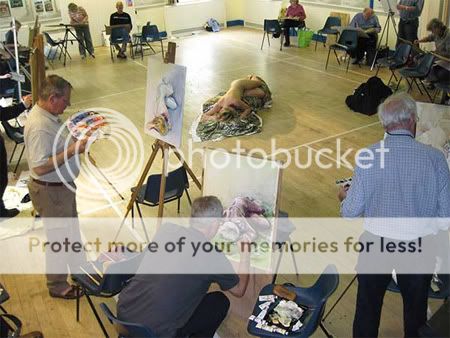 I gotta get me a life drawing class...
An understanding of usage, rights and how to determine fees does not hamper creativity, it gives an illustrator the freedom to be creative. Techniques in marketing and promotion change and evolve as quickly as illustration styles. You haven't taught promotion by telling students to send postcards. Ask any art buyer how many postcards he receives daily, before you suggest that direct mail even gets noticed any more.
 Norman Rockwell's "Art Critic" (1955)
If you don't recognize illustration as a business and concentrate on the required skills, you are shortchanging those foolhardy enough to believe in you and after all, they don't really need that diploma to get assignments any more than Dumbo needed his lucky feather to fly.
My question:
Do you agree with this article?
When you're really studying art and stuff, you may have come across this term: "Negative Space".

What the hell is Negative Space..? No, not the weird Negative Zone from the comic books. It's... I don't know. That's why I go to the place that has all the answers. No, not Wikipedia! ConceptArt.org!
Seedling, a longtime forum-goer describes the "Negative Space" as the the white space that surrounds the silhouette of a character.
Armando goes on a little more by defining "Negative space as a result of drawing a shape on the paper. Becoming aware of it initiates you into composition. One of the elementary things to do in drawing is to separate figure and ground, figure being things(people, cups,shapes, whatever), ground being the air that surrounds them.
On your piece of paper say you draw a square, the paper contained within it's contours is solid, all the paper outside of it is negative space. By moving the square around you'll find that you can change the shape of negative space: a rectangle with square hole in it, an "L", a "c".
Positive and negative space are ambiguous until they are defined by some cue, usually in our work the cue will be recognizable things like people and whatnot.

My thoughts:
Wow! With all this free data on the net, why waste a fortune on artbooks and all that jazz?? Ugh. I have no idea. Since I have a day job, and have got some cash to spare (since this is my hobby after all) why not? Why waste money buying a new cellphone, or electronic peripheral when can survive with the old one?! Anyway, going back to the topic at hand...
Here's a picture and then the same picture with all the negative space filled in...

Armando then points out this lil' tidbit: "Whatever is not intended to be a solid form is negative space. Take some steps back from the screen, or change the zoom level and you should see that the silhouette is clearer on the white background.
Basic composition, there is more contrast between black and white, than gray. Notice how the muscles form convex bumps. Even if you didn't know those were ape men, you would know they were the figure and the white the ground, even if you were to make them white and the background black the relationship would be the same.
When we first start drawing we only pay attention to the shape we enclose within the lines, ignoring that big shape that's surrounding it, but it's all just dividing the picture plane. Sketch little frames on a piece of paper, add simple shapes within them, but instead of looking at the area contained within the shape look at the area that surrounds it.
Sometimes positive and negative shapes become ambiguous, modern art tends to take advantage of that, it adds dynamism and complexity because there are mutiple ways of looking at the picture."
My thoughts:
You get it right? Do you get it? I'm asking you, Void. Answer me! What? Kev Ferrera has provided examples of excellent use of Negative Space? Coo!
So cool. As Armado would later say: "Now that the question "What is negative space?" has been answered, I'd like to ask, How does negative space become expressive? I can see the negative space in the examples, but I find myself paying attention to the subjects in the picture, the subject carries the expression, the negative space just seems like coincidence."
More of my brilliant comments:
Alrighty then! Thank you, Armado! Does anyone dare to step up into the plate?? How does "Negative Space" become expressive?
Ah... what's this? I see... oh! I see Mario. Mario, what do you have for us today?
"Negative space (in painting/illustration) is known as whitespace (black type has a white background) in typography/graphic design. That could be useful for finding more information although it has a different meaning for macro and micro typography.
Negative space, like most other compositional elements, depends on contrast (or lack thereof). You can use contrasting values to amplify or similar hues to unify something and all the hues depends on each other for effect.
The same goes for negative space and it works with the values in your painting. High contrast values (black silhouette against white background) create negative value while softer transitions reduce the effect of element separations. And if you have very similar values then you probably will have a hard time finding anything that looks like negative space.
So how does it become expressive. Not at all. It is part of a composition and creates a desired effect with the rest of the painting. It only appears in combination with the rest and is not an isolated something.
You could as well ask how does some hue influence mood in a painting. This only happen because each element depends on the rest to function properly.

My thoughts:
Good! Good! That clears things nicely. But hold on, lets hear what Kev Ferrera has to say about the topic - this one's good:
Kev Ferrera: "The main use (of negative space) is to clarify the pictorial statement... that is, to help the viewer "see" or "read" the actions of the figures easier. Clarity is important in storytelling.
Shapes *always* have meaning... Every shape has expressive meaning (artistic handwriting, shape-character as well as metaphoric reference). It is possible to tell one artist's work from another by use of negative shapes alone. For instance coll and Frazetta have a very different kind of character to their negative shapes, than Dean Cornwell or Leyendecker or Brangwyn or Fechin or Shiele or Klimt or Rembrandt.
And of course, all of them are different than artists who aren't even aware of the expressive power of negative space shapes. Often artists who aren't aware of the expressive potential of negative space aren't aware of the power of shapes in their works in general.

My thoughts:
Well well. Come on, folks. Lets give these people a warm round of applause. Great stuff! Great stuff.
Okay. Back to work.
With the dissemination of digital art tools among today's youth, breaking into the commercial art industry has become that much harder. Look at it this way, there's only so many artists Marvel or DC will hire as inkers, or colorists. There's only so many publishers willing to higher new talent to create book covers, or posters, or what have you.

It's a desperate race as young artists struggle to match the speed and artistic skill of professional artists. They're putting just about everything on the line for the sake of art. So what is the first thing that tossed away in this lifelong pursuit to be the next Ryan Church?
Is having a glamorous social life all it's cracked up to be? I was inspired to write this post after reading an innocent little thread on the well of artistic ideas, ConceptArt.org. The topic began when a young member named Mescher, gave her thoughts on the issue of "Art vs. Social Life":
"Lately I've been finding myself having to choose between art and a social life a lot more. I'd just rather be drawing. I either feel like I'm neglecting my friends for art, or neglecting my art for my friends.
I'm hope this will get better when I start at CCAD (Columbus College of Art & Design -ed) and meet some people who actually like art. But am I just supposed to kiss my current friends goodbye until then?
I mean I like them and all...I just can't take another round of

My thoughts:
Honestly now. This is really a painful subject to discuss. Rather than elaborating my thoughts on this matter, lets hear what other people have to say about this! Perhaps their opinions will mirror my own:
Tugelbend has this to say:
"I'm in the same situation actually. Right now I'm "losing" my friends because we don't share the same interests anymore. I rather work my butt off than just "hanging around" though it's not like I don't see them anymore. I still go out for a beer about once or twice a week with them but I find less and less to talk about. My head is filled with art unlike theirs and I see where this is leading to.
But whatever, art has top priority. You know, they can waste their time as much as they want.. but without me. I just hope that I will meet other people like me in the future and until then I'll run around friendless. sounds pretty emo lol"
My thoughts:
Hmm... I won't say I'm losing my friends because I love art. In fact, I'm pretty sure my friends don't even know I do all this weird art stuff during my free time. I know it sucks now to have someone to really relate to when it comes to this stuff (except for my brother maybe). There is a definite feeling of alienation when it comes to talking about my hobbies and stuff.
A member named Wheezy offers his own thoughts on the matter, something I think is quite nice actually:
"Take your sketchbook with you for some life studies, maybe get some ideas on something bigger to do later. Draw them playing
My thoughts:
I probably shouldn't mention the time I desperately felt the need to paint or draw something while I was chilling on a white sand beach. Yeah, good times.
But here's something interesting, a member and artist of some skill named Naomi offers her own unique 'guidelines' on this subject. I made it sorta bullet point-y since it seemed to fit that way:
"I've said goodbye to a lot of "friends" over the years. Especially people who don't teach you anything, who keep complimenting your art but never actually buy any.
- Get rid of these people fast. Do not hang out with them do not do free commission work for them.
- Get rid of non-artist friends who put you down.
- Now if your friend is an artist you have an advantage by working together and improving your art. there is no reason to neglect your chit-chat and shoulder to lean on duties there.
- Also get rid of boyfriends or girlfriends who don't support your art dreams, or people who think you're worthless because you do art.
- This includes family. No matter what they say, your family can always be cut off. If they are bringing you down get rid of them.
My thoughts:
The deeper I get into this topic, the um... stronger these young artists opinions get! Ah, but from where I live, I can sort of see where her frustration is going. Everyone always asks... how do you hope to make a living as an "artist"? Is it possible to quit your day job just because you started selling commissions to aficionados at deviantART? Hmm. I guess you have to really ask yourself what level is your passion for this sort of thing. Can you survive living alone, honing your art skills in a tiny flat, eating non-fat crackers and drinking water? Ah, who knows? But if you found Naomi's views to be interesting, why not check her portfolio out? Check out her sketchbook too!
Moving on... If you are one of the lucky few who actually got into an art college, than lucky you! This is probably the one of the few places on Earth where you'll find people your age who share the same interest and viewpoint in life. A member named Space Sprayer offers his experience on the matter:

"I had to make this sacrifice. Unfortunately it doesn't ever stop, although it does get easier. I lost touch with all my mates during college, but then they were a group who had very different goals in life anyway.
Now that i'm at uni studying for my Bachelor of Arts, surrounded by people who have the same interests and aims. As a social event instead of going out and getting pissed like my old mates did, we might go sit in the park on a nice day and draw the people that pass by, or the scenery around us etc. I still have to forgo the occasional social event because of work, but my mates here understand that."
My thoughts:
Sacrifice - for the sake of art. Ah, what a compelling notion...
On the subject of finding like minded people, why not try to find out if your area has any kind of artist's convention or something like that? Back in 2007, I traveled all the way to lovely Singapore to attend the CG Overdrive event - and that literally changed my mindset on art. I talked to folks like Michel Gagne (a great FX animator) and the boys of Imaginary Friends Studios. A very memorable experience.
I would have loved to attend future CG Overdrive events, but I didn't like how it focusing squarely on 3D art. All that Zbrush talk, rigging, character modeling doesn't interest all that much. I know that having basic knowledge in 3D modeling can have such a massive impact on one's portfolio, but hey, I already have trouble drawing a person - what makes you think I'll have an easier time makin' one in the third dimension??
Sorry, got a little carried away there. But out of all this, what has Mescher have to say about Art versus a Social Life?
"Now that I think about it, I don't really like my friends as much as I used to. That's probably part of the problem.
My boyfriend doesn't mind letting me draw him all day, and he's the only person I really care about. He actually said he'd go to the zoo with me so I could do animal studies. I think he has nooooo idea what he signed up for!
I guess I'll just have to get used to keeping a balance (and figuring out what I actually want.) I can't have my cake and eat it too, right?"
My thoughts:
That's the spirit! Why should you let one aspect of your life run you like that? Try to find a healthy balance so you won't feel like a total shut-in. If your love for art can't be helped, then at the very least try to accommodate your real life friends from time to time. You could be a happier person knowing you have a life beyond your self-absorbed world of art. Just throwing my thoughts here... :)
Ah, but this member... Jushra, offers a very unique point of view:

Nobody can tell you how to live your life except for you and nobody will bear responsibility for any of your actions but you.
Don't try to control your peers and don't let them control you. You have to keep what you value close. Choosing your values is another story though. Don't sacrifice yourself to others, nor sacrifice others to you. You have to sometimes trade-off for balance, but make sure it is done for the right reasons."
My thoughts:
I have to admit, that statement is quite empowering. Well, it really depends on the person I guess. What do you value more in life? Are you willing to sacrifice one for the other? The thread goes on explaining a little more about that. People start offering their own wacky point of views and anecdotes. You can see the full thread here.
The person who started this thread would later make it clear that she isn't saying that you should get rid of your friends just because they aren't artistically inclined. For her, the problem arises when your friends start becoming needy of your time, and simply take the time to understand what you are doing and why. Ah... well. I get that. Hmm... What do you think??


