I think I'll do a touchy-feely artist post today. Hmm... Let me scan ConceptArt.org for something I can talk about... Ah! Here's one: "Why do you draw?" Perfect!!


So why do YOU draw? Oh right... You don't respond. But the people in ConceptArt sure do! They're a nice bunch. G A I A originally posted the question because she didn't know drawing was simply a habit or some kind of a addiction that doesn't seem as fun as she would like to believe. I have days like that.

Sebastard said:
"In the words of the immortal Nietzsche, conflict and strife (including inner conflict and personal strife) will shape a man into something better then he once was... Why do i draw and write? To eventually become one of the greatest fantasy/fiction artists/authors this world has ever seen - that simple . No telling if i'll ever achieve this goal, but i believe in setting lofty ambitions because: "Man's grasp exceeds his reach." To me, it doesn't really matter whether drawing is fun or not. Goals do not need, indeed will often not be enjoyable or fun 100% of the time - that's part of the "conflict" bit. To preservere through the times that are harsher then others and may not be as fun :p.
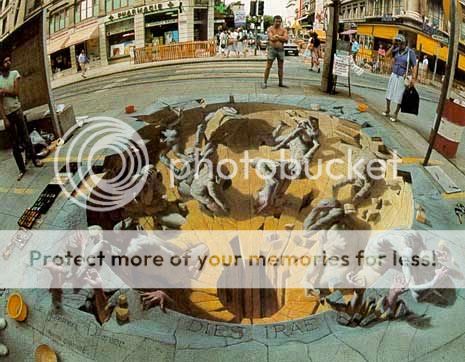

No, nothing is really "just" a hobby to me.


Blackspot said:
It's an itch and I need to scratch it. It gets worse if you ignore it.


Crass said:
Because I want to make my inner worlds come alive, for me and whoever else that wants to see.


 Maybe he needs to draw...

The Original [E] said:
Other then because if I don't draw and get my ideas out then my mind will overload me with ideas and I won't be able to focus on much until I get them out.

The other more important reason is, to me art and my creativity is like a muscle, you have to keep working it out and constantly give it stimulation or it will atrophy and die. Thats why I draw and paint every day for hours on hours. Have you ever known a person who used to draw and stopped because of one reason or another?


FranciscoShreds then said:

I guess it's because I have the exact opposite mentality as you. I always want to draw, everything I see in life makes me want to draw, makes me want to reproduce what I see or expand upon it. Only times I feel like shit is when I don't draw and I could have. If I slept in, if I forgot my moleskine or sketchbook and I see something very interesting.


My thoughts:


Wow! Yeah! Cool! I wholeheartedly agree! Saying anything would be redundant. Maybe making a list would suffice. Okay, so it seems artists draw because:

1.) It's fun and addictive.
2.) We're all gonna die sooner or later.
3.) It's a form of escape.
4.) To capture / realize imagination. (Hmm...)
5.) Money (Eh?)
6.) Self-Improvement / Therapy.
7.) I heard this from Artgerm in Singapore - "I just want to draw something beautiful"

And as a very odd aside, I decided to embed several videos of artists and their "moleskins". (Some dating back to 2006)


This one's kinda funny.


Here's a nifty one from a real fine artist.


Buy your moleskin today and feed your art addiction!! (That's a plug right there...)


I love Geco Hirasawa's work! Why, you may ask? Because it's chock full of eye candy. So much eye candy in fact, that it makes my eyes bleed. And for once, that's a good thing!!

Here's what I know about Geco Hirasawa: She's known as "Hira Geco" in deviantART, and is said to be living in Tokyo, Japan.


According to her recent journal post, she draws her linework in pencil and colors the whole thing in Adobe Photoshop. The whole process takes about two to three days, depending on her mood...


Vocaloid in Space.


Some of her major influences include photgraphers Robert Capa Van Der Elsken (could explain the fascination with perspective?). She apparently doesn't have a favorite artist (besides the obvious Tezuka and Miyazaki) and takes inspiration more from real life (TM), various photography books, and the like.


She's been honing her skill for the past five years, and dreams of becoming a professional illustrator. Unfortunately, she laments that her style doesn't suit the Japanese market that well.


What is the word the Japanese commonly use for times like these? Ah... Ganbare, Hira Geco!!

To see more of Hira Geco's work, check out here deviantART profile! If you like her stuff, then by all means support her!


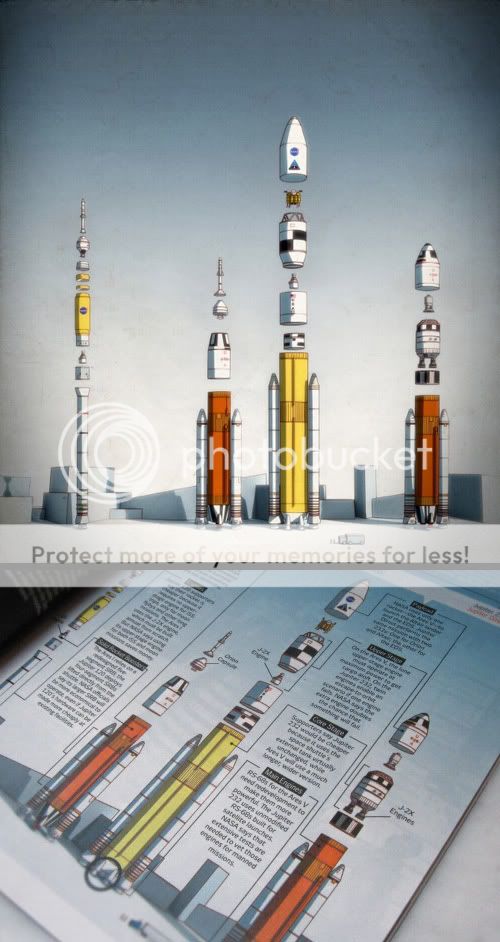
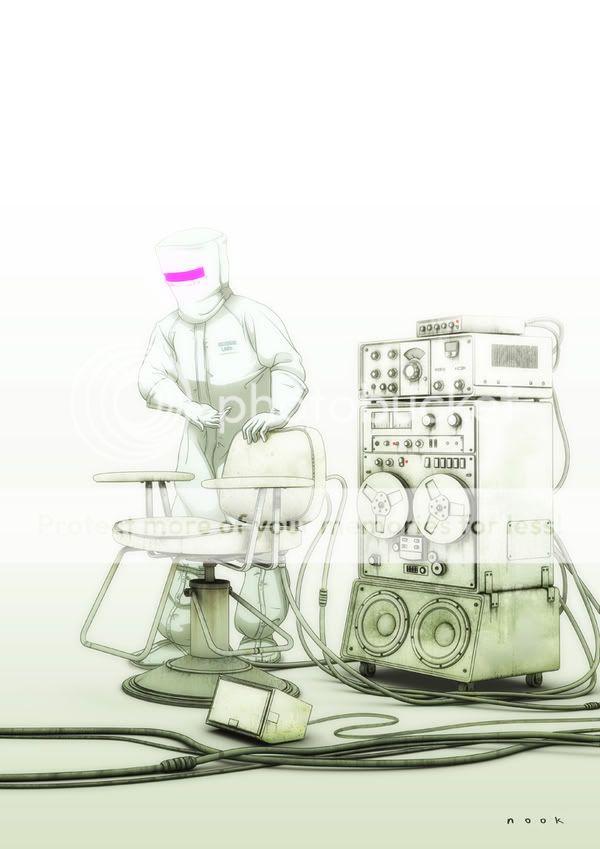
Nook. Great illustrator. Got featured in several magazines including iDN and ImagineFX. Collaborated and produced a wonderful artbook featuring two hundred illustrators (for a cause to boot!). Did a lot of 3D stuff as well which seems to blend the 2D stuff pretty well. Does a lot of commercial work for various companies. Sorry, I'm not in the mood to do a grammar check.


One of Nook's early works in '07, the "Sakura Spaceman"


"Damn Cherry Blossoms!"

The bulk of his illustration work can be found at his profile in Behance, which is cool because he provides detailed descriptions about his artistic process and how he released his work to the adoring masses.


An example of the man's work in progress


Cool diagram for Popular Mechanics

You can read a lot more about his life and work at his blog (http://thehiddennook.blogspot.com/).


A simple enough question. What does the denizens of ConceptArt.org think of "tracing" as a method of learning?


Gocke posed this question in the forum, and noted three ways to look at "tracing"


  • I read that tracing an image teaches you a lot more than simply referring to the image by looking at it. 
  • Others claim it will hinder your progress and will not really teach you anything about drawing.
the_jos pointed out the uses of tracing:

"First of all is learning your mind that things ain't off when doing foreshortening. I did a foreshortened beak of a bird of prey a couple of weeks ago and my mind complained a lot about stuff being off. It's only at the end that things fell into place and turned out to be ok. When making various partial traces of such an object it's possible to learn your brain that those 'odd' lines are actually ok.


The second usage is for quick setup of things.
If I want to practice values, shading and rendering I could trace the same image a couple of times to try different things.

Last and not to be underestimated. Tracing can learn you to make steady single lines. Doesn't matter on sketches, but when you are going to ink something you might want to have a steady hand..."


Arshes Nei pointed out the possibility of confusion with the subject:


"I refer to what you're talking about "Eyeballing"

Tracing is well actually going over the lines. If I for example, made some pencils and wanted to ink them, I'd get my lightboard and trace over the image. Does that count as cheating?

I want to make that distinction because it tracing and eyeballing are two different things in my opinion. It's one thing to trace over an image using a projector or light board, it's completely different to learn how to see spacial relationships to learn better control through observation and eyeballing.


I think you'll learn better this way..?


It also irks me because n00bs will interchange the term when I'm saying "ok gotta trace this" and I'm referring to my own works and they scream "cheating" when I have to explain to them. No, I'm inking, and I want to keep the original pencils around in case I mess up."

joyproject simply states:

"Tracing is fine for learning, but don't end up using it as a crutch."


OmenSpirits concurs:

With tracing, one can learn about the landmarks on the body.

The rest more or less said its cheating. Still, you can read more at http://conceptart.org/forums/showthread.php?t=154586 or http://www.conceptart.org/forums/showthread.php?t=113058 which is an older thread on the same topic.

My thoughts
So what do I think of tracing? Is it good or bad for an artist's development? Let me put it this way... it... depends.

Many artists believe that anyone caught tracing a reference photo shouldn't even be called artists. That this whole tracing business should be left to kids. Not so for the legendary DC/Marvel artist Neal Adams, who believes tracing is one of the keys to better looking art. According to a section in Neal Adam's webpage, he was quoted saying that "...if they really want to learn to draw better. The first thing you need to do is get yourself a tracing pad and some solid and clear photos from magazines and anywhere you can get them. Trace, trace, trace. Trace some more. Make it a regular part of your drawing process. You will learn more by tracing than anything else. When people hear this their immediate reaction is 'I'm not gonna trace, that is cheating.' It is not. This is how you will learn."

So like I said... It depends.


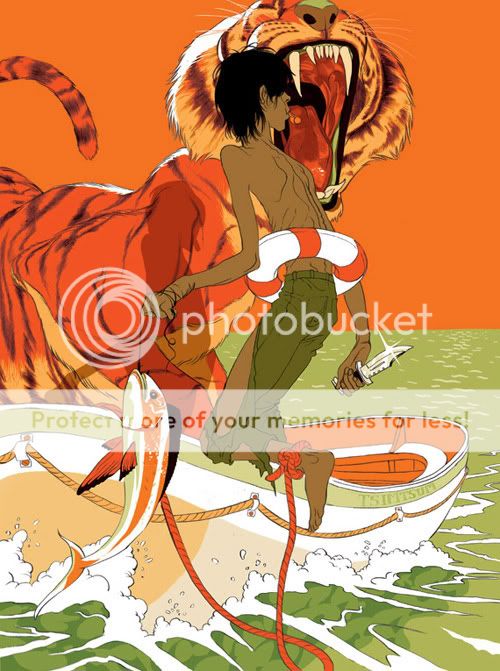
Do you know Tomer Hanuka? According to the innumerable sites that talk about this award-winning illustrator, he's worked with Time Magazine, The New York Times, Rolling Stone, MTV, among others. He's done a great deal of work in the funny book and fashion industry as well. According to an interview at formatmag, he got hooked on comics pretty early in his childhood in Israel.


The "...whole idea of superheroes, visual icons, worlds within panels" fascinated him in his youth, and that's when he decided to pursue creating his own stories in the medium. After his mandatory service in the Army, he decided to pursue art as a career and enrolled at New York's School of Visual Arts. Mr. Hanuka describes living and studying (and eventually teaching) at New York as the "...ultimate growing experience in the way it’s set up for the young and hungry to become comfortable and still hungry."


His longtime collaborators Lorenzo Mattotii and Nicolas de Crecy have proved most fruitful throughout his career. He keeps close ties with his brother, Asaf, (he's based in France) and collaborated on a number of projects on life in Israel.


Did I mention that he absolutely loves the medium of comics? Mr. Hanuka stated that he drew inspiration from "... art... books, movies, and images." He states "...Can you imagine your life without them? We are all made of other people’s dreams, our memories, a song that reminds us of that girl, a chain link of associations flicker endlessly in our psyche, all fused with culture we’ve consumed at one point and all 100% authentically ours."


When questioned in another interview done by Quiet Color about contemporary illustration, and the trends he has seen in wake of the recession, he believed that "...illustration is becoming very trendy is in advertising, in places that we’re not short of the classic places in terms of the aesthetic space they used to create."


He goes on to state how "...a lot of the corporate world taking street creds from graffiti artists and putting it on sneakers and putting it on billboards to get cool points in a very cynical way. And there’s a lot of like that anti-craft, scruffy, un-digital, unrefined illustration that finds its way into advertising big time." Wow. "Magazines are shrinking, newspapers are shrinking but advertising is growing for illustration… nobody believes photographs anymore because there is so much Photoshop, so a drawn image is suddenly a silver bullet exploding hearts of unsuspected preteens and other desired market shares."


You can read more about the aforementioned interviews at:

QC INTERVIEW: TOMER HANUKA

FORMATMAG: TOMER HANUKA


Be sure to go the man's site and learn more about his current work!
www.thanuka.com
And check http://tropicaltoxic.blogspot.com/ to learn about the man's process.


Contraomnes. An American illustrator whose portfolio packs quite a punch! (...)


According to Contraomnes, his favorite artist include Tomer Hanuka, James Jean, Kent Williams, Leinil Francis Yu, Adam Hughes, Alfons Mucha, and many more...


You can read more about his artistic journey at his deviantart!


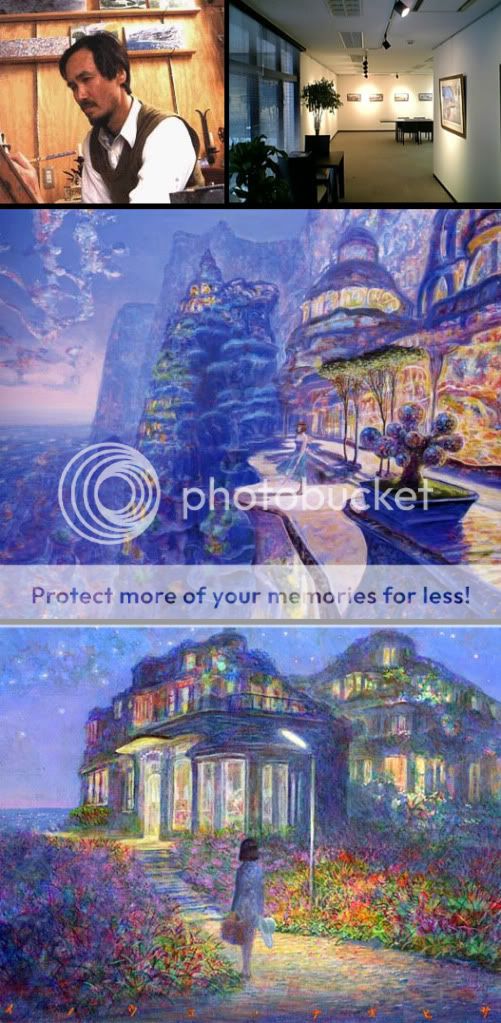
If there's one thing that I'll always remember after watching Studio Ghibli's Whisper of the Heart a few years ago, its those fantastic dream sequences that the protagonists conjures up.

The guy's work was just so different from what I had seen up to that point. However, it wasn't until a few years later that I would learn the identity of the background artist. Why'd it take so long? I don't know... I guess I was just lazy.


Here's a brief rundown on the guy's life:


1948
Born in Osaka, Japan

1971
Graduated from Kanazawa College of Art.

1985
Comic book, The Tales of Iblard, published by Seishinsha and Co. Ltd.

1994
Collection of paintings, The Natural History of Iblard and published by Cacoosha. (volume II and 1997; volume III and 1999; volume IV and 2003)

1995
Took charge of art in the visionary scenes of “The Story Given Me by Baron” in the animated film and Whisper of the Heart

(A production of Studio Ghibli/Screenplay, storyboard and production: Mr. Hayao MIYAZAKI and Direction: Mr. Yoshifumi KONDO)

2001
Exhibition “INOUE Naohisa - Iblard 2001” (Beltin Poile and Paris)
A picture Book “The World is your collection” by Cacoosha. A collection of picture and story “I heard that in Maze city” by Kodansha.

2003
Exhibition “NAOHISA INOUE Recent works” (Caelum Gallery and N.Y.)
Professor at Seian University of Art and Design

2007
Director: IBLARD JIKAN

2008 - Present
More Exhibits...


The guy's released a bunch of artbooks throughout his career, and has appeared on numerous exhibits. One of Mr. Naohisa's "recent" accomplishments is directing Iblard Jikan, a feature length "film" that brought his original paintings to life. Reception was mixed, but I don't care.


What's Iblard Jikan? According to one of the few websites dedicated to Mr. Naohisa's world, Iblard is described as...


Fragments of forgotten memories... Nostalgic days that are sure to come again... IBLARD is made of such elements.

Beyond that, I have no idea. However, sure looks darn pretty.

If you're starting to get the impression that this post is just an excuse to dump Mr. Naohisa's wonderfully exquisite works, you're probably right. But if these pictures are already worth gazillion words, shouldn't that be enough!? (Excuse me?)
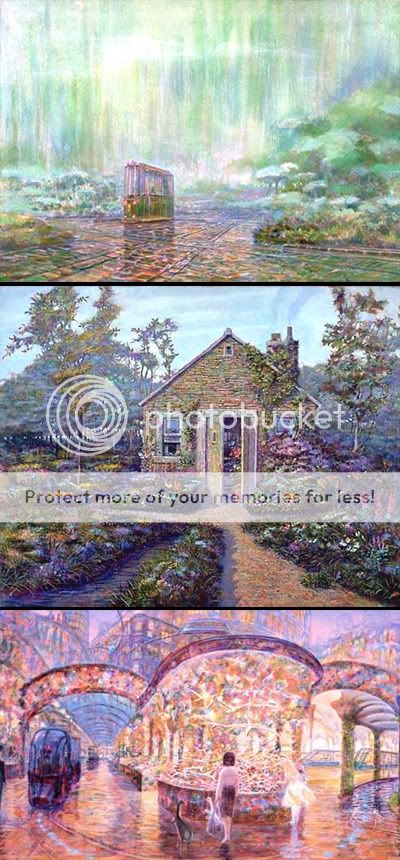
If you're one of the few people who are wondering how the heck did he paint that way, you can go check out a little "How to" he did on his website. If you wanna buy some merchandise... good luck.

And... that's it. Phew! Oh, and like most blog posts about Mr. Naohisa, I feel I have to post a video on that Iblard thing. Here's the trailer. In Japanese.


Puzzled by how color "works" in some paintings?

Curious as to how light affects objects??

Look no further.


Introducing "The Dimensions of Color" a website dedicated to teaching you nearly everything you need to know about color, lighting and more!


See "The Dimensions of Color" website at:
http://www.huevaluechroma.com/

Disclaimer:
This site assumes you have some knowledge on the basic principles of color!

Thank you, David Briggs!

Remember back in the day (around late 2007) when I was salivating over this manhua thing, beginning with artists like Hyung Tae-Kim and later stuff from Imperial Boy? Yeah, those were ... innocent times.

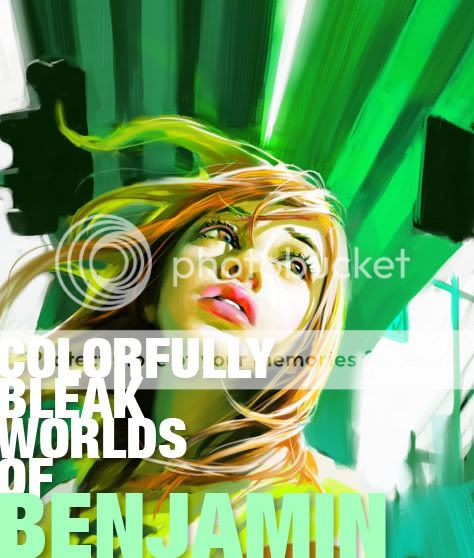
So here I was, looking for the next 'big' art inspiration (or in my case not so big, since I rarely update and thus don't keep up with the times) and lo and behold, I found Benjamin.


I think I will drop my job for a few seconds as I upload some of the most striking, elegant digital paintings/illustrations I've ever laid my eyes on. I've always loved works from artists that manage to elevate the mundane, you know? Put that ol' artistic spin to it and make it look all mysterious, sexy and all that good stuff.

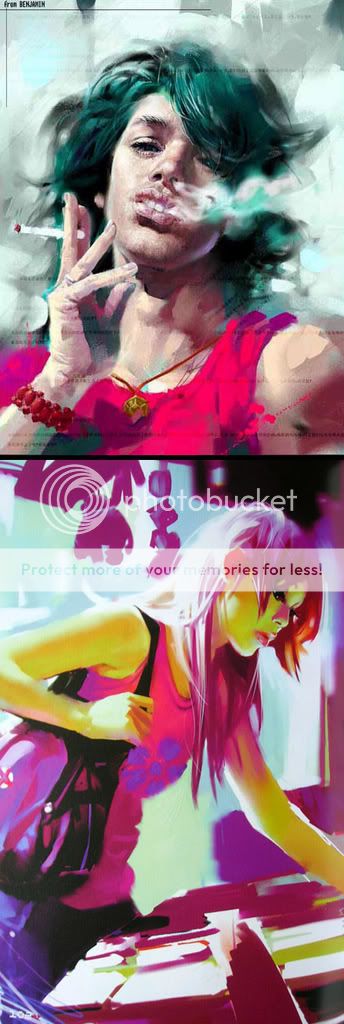
Who is this Benjamin chap? Okay, let's see... according to a number of blogs that talk about this guy (many of which are in French), his full name is Benjamin Zhang Bin' who hails not from Japan or Korea, but from China. He's a Manhua (Chinese Comic Book) artist, and a damn good one too. (
Told you Manhwa/Manhua would catch on sooner or later! -Ed)

The
French can't seem to get enough of this guy, and a lot of Benjie's stuff was first published there. He's published a lot of stuff over there, and some time in 2008 he began getting stuff out through TokyoPop, the American Manga house. It saddens me that I may never see his stuff translated and released in my country, but at least I get to ogle at these breathtaking covers. Click on the image to get a slightly better look, whydontya?

Some time in March 2008, the entire Manhwa/Manhwa phenomenon got a really big push from all sorts of creative types, with events being held across the globe. There were Digital Art/Manga competitions, conventions held at London and around Europe, and books being published Stateside. Lots of great stuff all around, and for some inexplicable reason, I missed it. Oh right, I live in the Philippines.

So I read one interview with ol' Benjie, and they asked him something regarding his 'style'. He graciously replied:

"Ah? You’re talking about how my illustrations are more realistic, right? Originally my comic characters were even lankier; recently I’m already very restrained. That kind of lanky, exaggerated body is better to draw, producing results quickly. Comics are always rushed and the amount of work huge. No choice. If it’s an illustration, I use sufficient time to pay attention to the human body, to find the aesthetic sense in more realistic proportions."

My thoughts:
I was lucky enough to buy Benjamin's
ORANGE manga, (That's how I discovered the guy's work) and he's right - a lot of his stuff is done quite quick, though his skill as an artist makes his rough stylings easily identifiable. He excels depicting his subjects, mostly disgruntled youth-types, in the most beautiful and vibrant manner possible. He clearly uses Corel Painter, which helps sell the painterly effect of his work.


The sequential image shows off ORANGE's dynamic stylings


Looking at these illustrations and even the sequential images, a lot of people might have trouble describing what makes it different from stuff from Japan and other parts of the world.

Yishan Lee, a Chinese UK-based artist, had this to say:
"...people probably will realise it is hard to tell what is a Chinese comic just by looking at the pictures. Actually, Chinese comics are so diverse in styles. They have been influenced by European, American, Japanese comics and yet carried on some traditions from traditional Chinese drawings. For individual artists, they have their own preference. It is only easier to tell which one is Chinese Manhua when it comes to the story. Chinese artists do have their own way to look at the world."


Me thinks the guy in the image above is disappointed in what life has to offer...
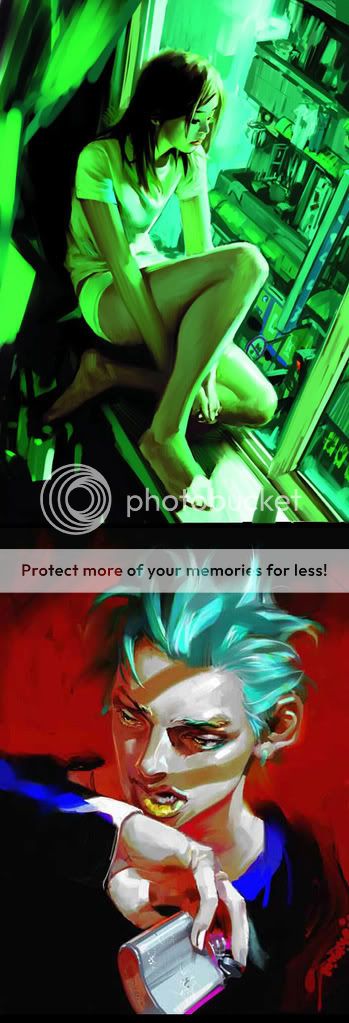

I don't live in Mainland China, but Benjamin's
ORANGE (set in Taiwan I think?) paints a beautifully decadent world where the youth are finding it hard NOT to rebel. An interview asked this question - why are many of the protagonists of his comics a bunch of vain, emotionally distressed teenagers?

"Actually, I find that everywhere, young people are no longer believing in anything, no longer having faith, totally at a loose end psychologically and feeling really insecure. These young people can't cooperate or fit in with society, and especially for those who have had a relatively high level of education, for them this psychological void is even more serious. In most cases, they hardly have any trust in their parents (for someone Chinese that's the absolute minimum of morality) and also don't trust either their partners or friends."


Angry, rebellious teens... in China?? Really? No way.


Whatever the case may be, I'm going to go hunting for this guy's work. I don't care if you say his work might be a tad uninspired. There's just something about the Chinese stylings of the story that makes it feel fresh... and all dirty inside despite being depicted in the most beautiful, stylized way possible. Here's an interesting little snippet from the interview I found interesting:

Do you feel that using this kind of exaggerated comic style expresses your story’s mood, etc. better?

"Readers like this kind of style more actually. I dare say if I use my illustrating style in my comics, all my efforts will only raise questions amongst the readers. They’ll say my comics aren’t as good as before. But I’m just about to take this risk, to draw my comics in my illustrating style…"

Read the full interview here.

Yeah. so like I was saying - beautiful. Hmm... I wonder how many times have I described his work with that adjective..? Ah, it doesn't matter. One of Benjamin's goals in life was to be that of a world-class painter. That and to travel the world. Great guy, great art - I'll be watching.

Oh, if you can spare two minutes, maybe you can watch this video showcasing this Manhua/Manhwa craze. Which I missed in 2008. Just watch it, okay?


Also, check this article/interview about Chinese Manhua. Good read.

Blogumulus by Roy Tanck and Amanda FazaniInstalled by CahayaBiru.com

Followers

About Me

ChrisK
On and off blogger.
View my complete profile